
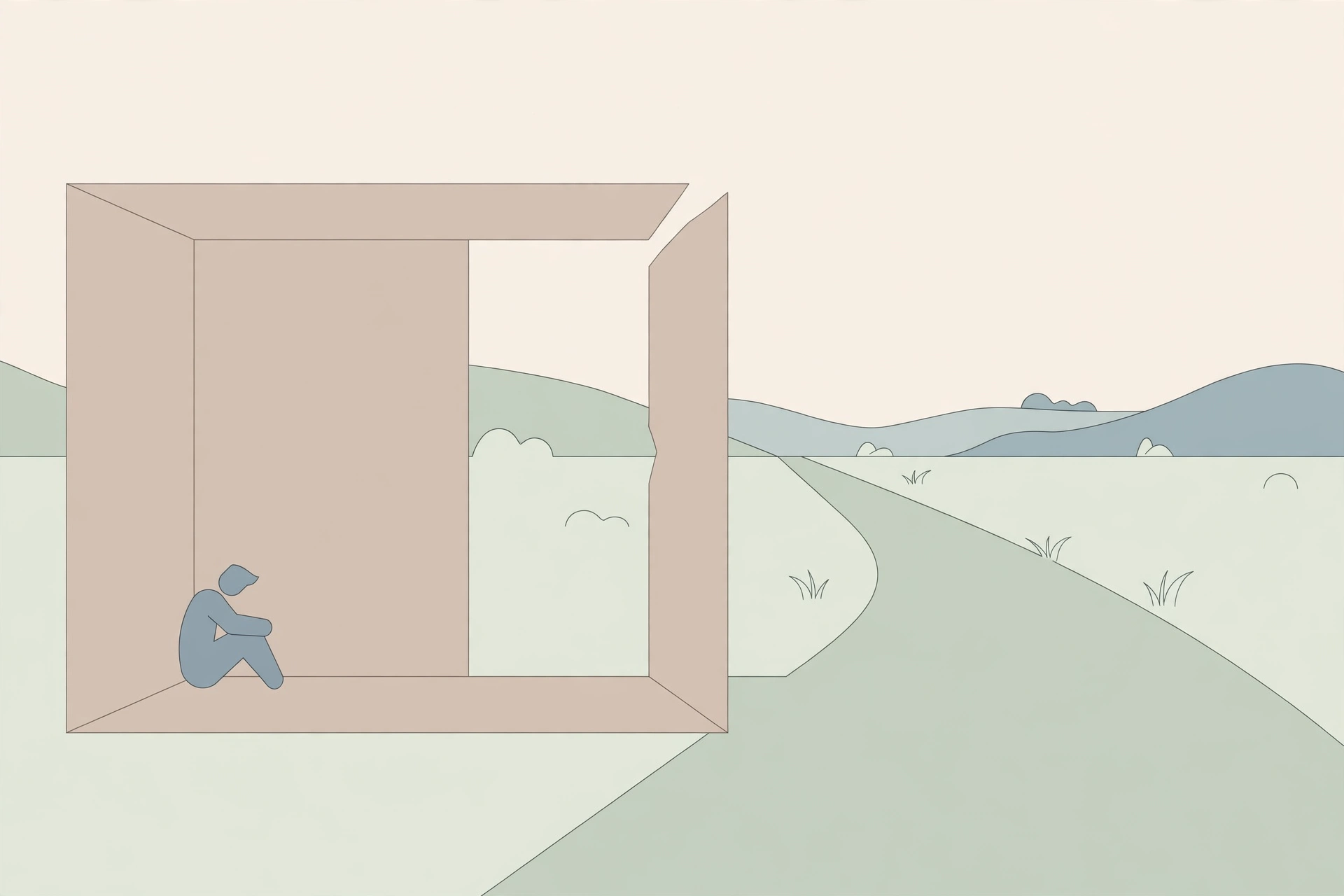
Learned helplessness is a state in which a person or animal stops trying to escape or improve a bad situation after repeated experiences in which their actions made no difference. The concept comes from experiments by Martin Seligman and Steven Maier in 1967. It describes a learned pattern of passivity, not a character flaw, and it is a research concept rather than a clinical diagnosis.
What it looks like
Learned helplessness appears as giving up early, or not trying at all, even when a way out becomes available. A student who has repeatedly failed maths despite studying may stop attempting homework, even in a new class with a different teacher. An employee whose suggestions have been ignored for years may stop raising ideas, even after a new manager arrives who would listen. The outward sign is the same: effort stops before the situation has actually been tested.
Why it happens
In the original experiments, animals exposed to unpleasant events they could not control later failed to escape even when escape became easy, while animals that had control over the same events learned to escape readily. The proposed mechanism is expectation: after enough uncontrollable experiences, the learner comes to expect that nothing they do will matter, and that expectation suppresses further attempts. Importantly, the expectation can outlive the conditions that created it, which is why a new teacher or manager may not immediately reverse the pattern. Recovery usually requires experiences in which effort visibly changes the outcome, rebuilding the link between action and result. Later work linked this pattern to how people explain setbacks to themselves — whether they see a failure as permanent and personal, or as temporary and specific.
An everyday example
A person applies for dozens of jobs and hears nothing back. After months of silence, they stop applying, even though new openings appear that match their skills. The rejections taught a lesson — “applying changes nothing” — that now blocks the very action that could change the outcome. The passivity is understandable given the history, but it also keeps the history from being updated by new evidence.