Skip to content
Psychology Connections
  • Psychology
  • Quizzes & Tests
  • Books
  • Dictionary
  • About
  • Contact

Personality Psychology

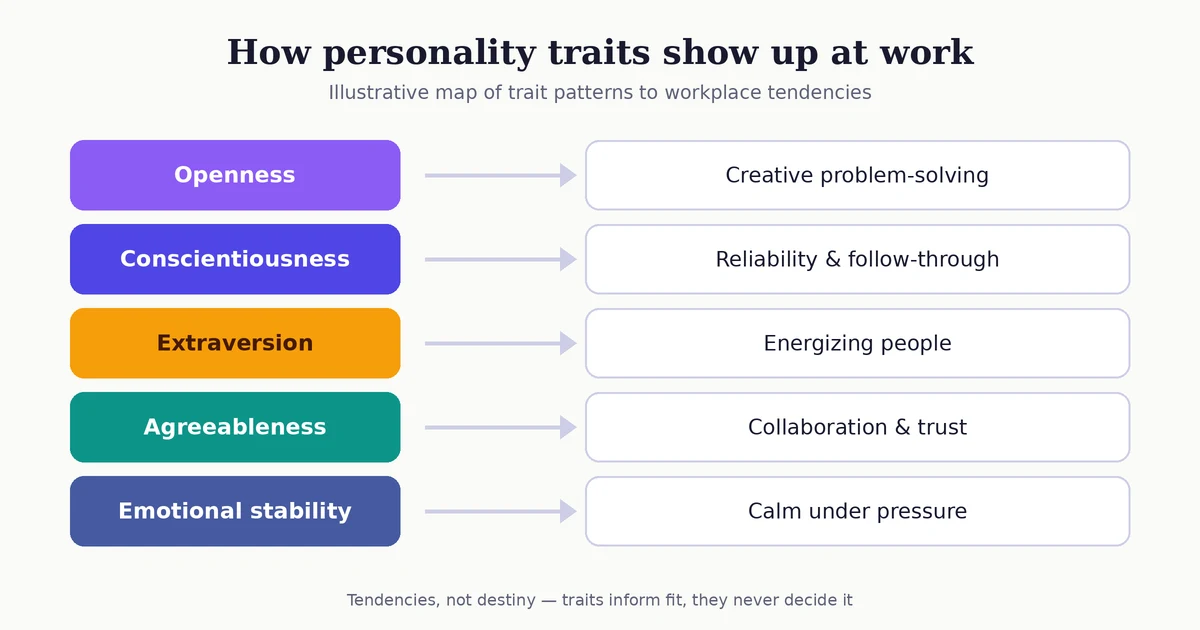
Original concept diagram mapping five trait patterns — openness, conscientiousness, extraversion, agreeableness, emotional stability — to typical workplace strengths

Personality and Career: How Traits Shape Your Work Life

October 3, 2026 by Waqar

Your personality doesn’t decide your career — but it quietly shapes how you work. Two people can hold the same job title and do it …

Read More →

Categories Personality Psychology
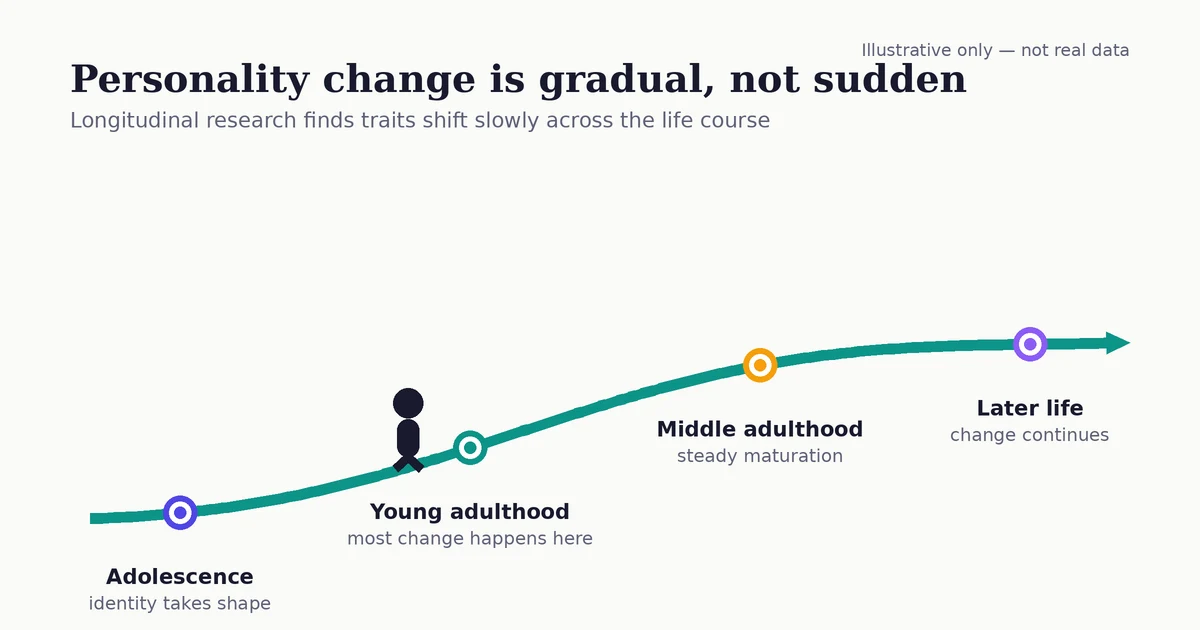
Illustration of a winding path rising gently through adolescence, young adulthood, middle adulthood, and later life, showing that personality change is gradual

Can Your Personality Change? What Research Says

October 3, 2026 by Waqar

Yes — but slowly, and not in the dramatic way movies suggest. Decades of longitudinal research, which follows the same people for years and measures …
Read More →

Categories Personality Psychology
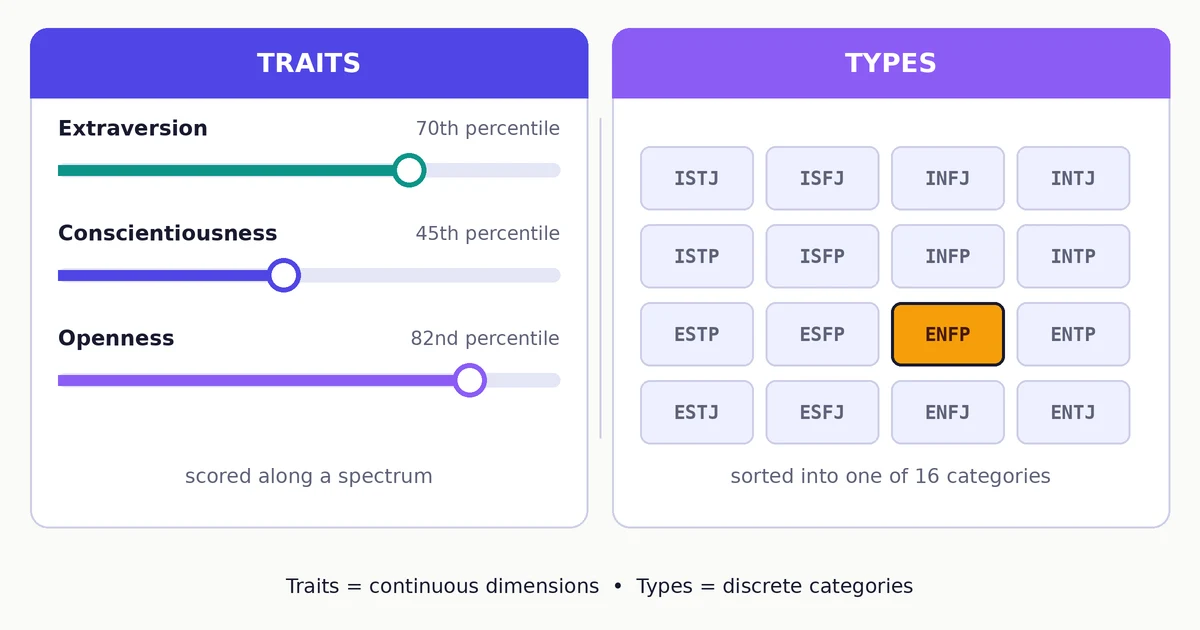
Original diagram comparing personality traits as spectrum sliders with percentile scores against personality types as 16 category boxes, with one type highlighted

Personality Traits vs Personality Types: What’s the Difference?

October 3, 2026 by Waqar

The difference is simple: traits describe you as a point on a sliding scale, while types sort you into a box. A trait framework says …
Read More →

Categories Personality Psychology
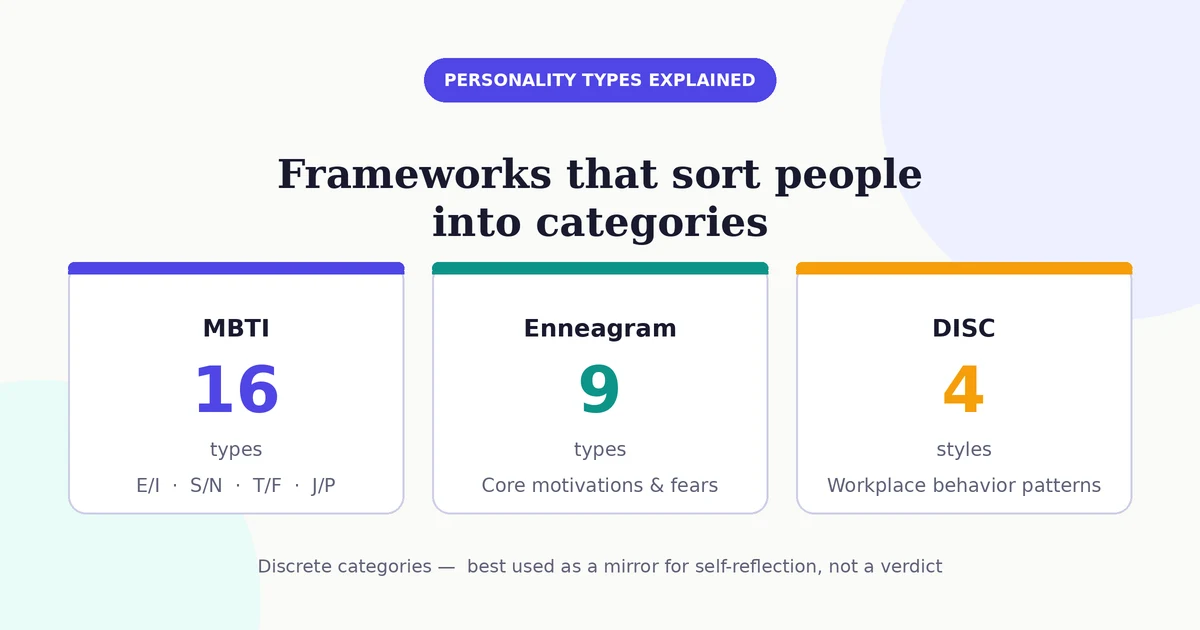
Diagram with three cards summarizing the MBTI with 16 types, the Enneagram with 9 types, and DISC with 4 styles, under the heading 'Frameworks that sort people into categories'

Personality Types Explained: MBTI, Enneagram & More

October 3, 2026 by Waqar

A personality type framework sorts people into discrete categories. Take the MBTI and you come out as one of 16 four-letter types, like INTJ or …
Read More →

Categories Personality Psychology
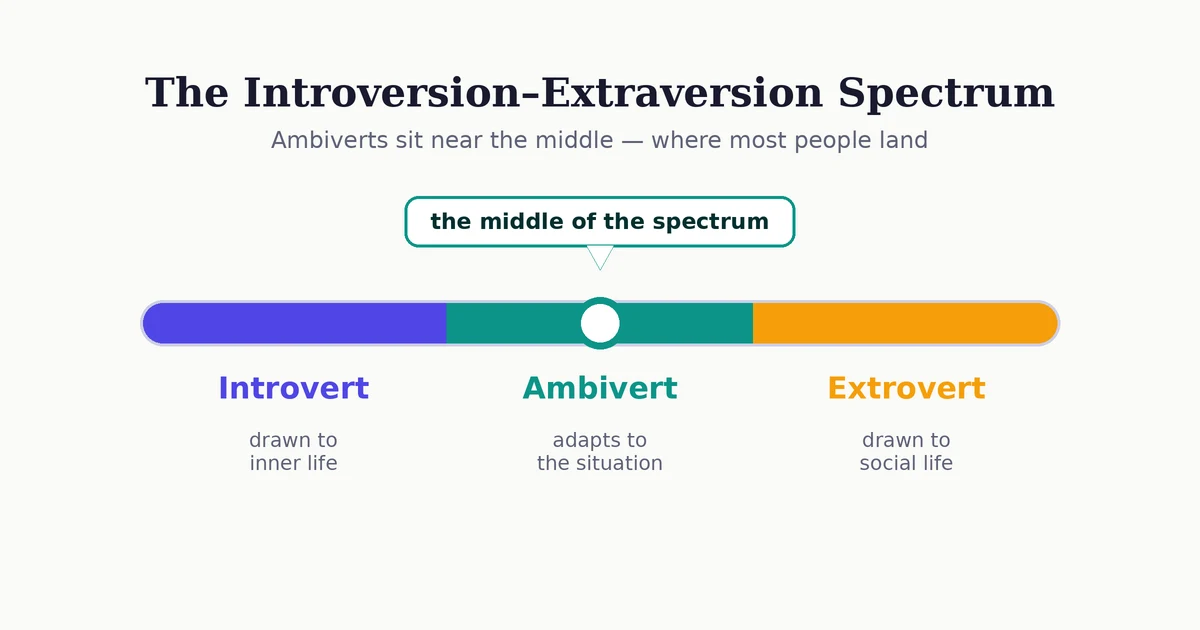
Spectrum slider diagram showing Introvert, Ambivert, and Extrovert, with a marker at the middle labeled the middle of the spectrum

Ambivert Meaning: 7 Signs You’re an Ambivert

October 3, 2026 by Waqar

An ambivert is someone who sits near the middle of the introversion–extraversion spectrum — a person with a balance of introvert and extrovert qualities, who …
Read More →

Categories Personality Psychology
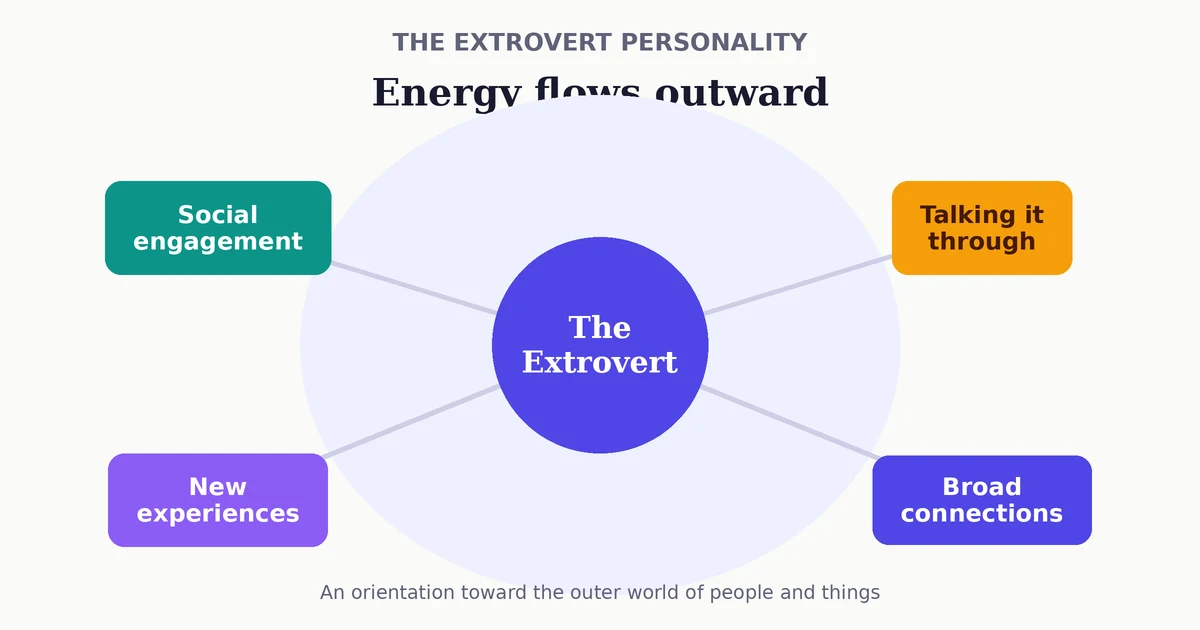
Diagram showing the extrovert personality as outward-flowing energy: a central 'The Extrovert' node connects to social engagement, talking it through, new experiences, and broad connections

Extrovert Personality: Traits, Signs & Strengths

October 3, 2026 by Waqar

An extrovert is someone whose energy and attention naturally point outward — toward people, activities, conversation, and the buzz of the world around them. Social …
Read More →

Categories Personality Psychology
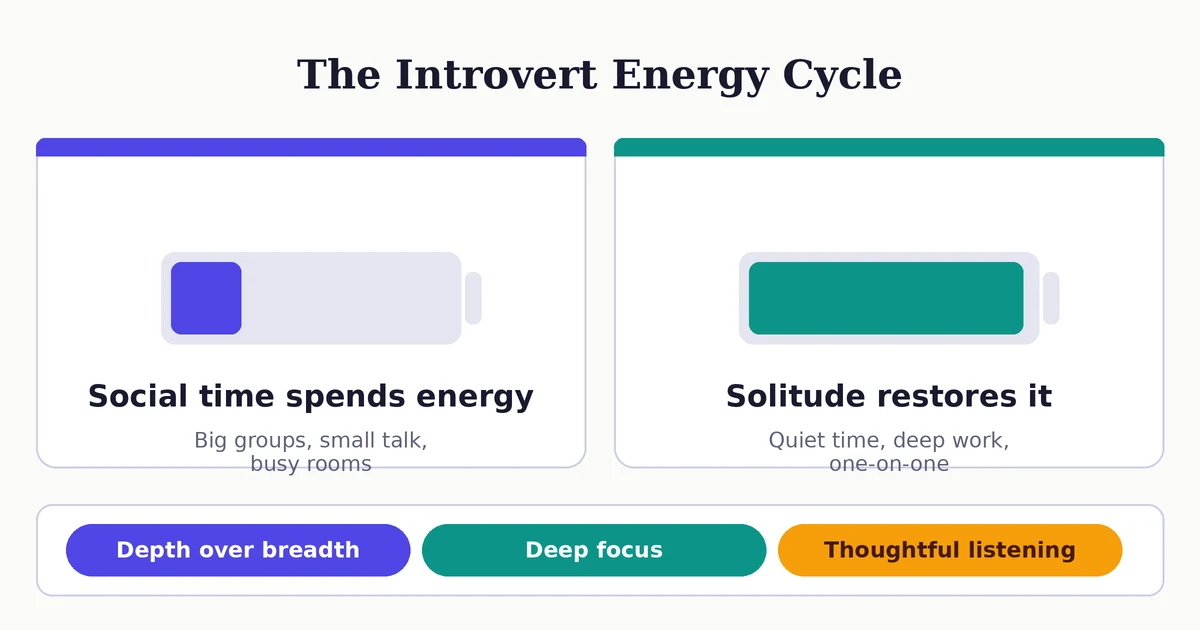
Diagram of the introvert energy cycle: social time such as big groups and busy rooms drains the energy battery, while solitude such as quiet time and deep work restores it — highlighting depth over breadth, deep focus, and thoughtful listening

Introvert Personality: Traits, Signs & Strengths

October 3, 2026 by Waqar

An introvert personality describes someone who is oriented toward their inner world — their thoughts, feelings, and ideas — rather than toward the outer world …
Read More →

Categories Personality Psychology
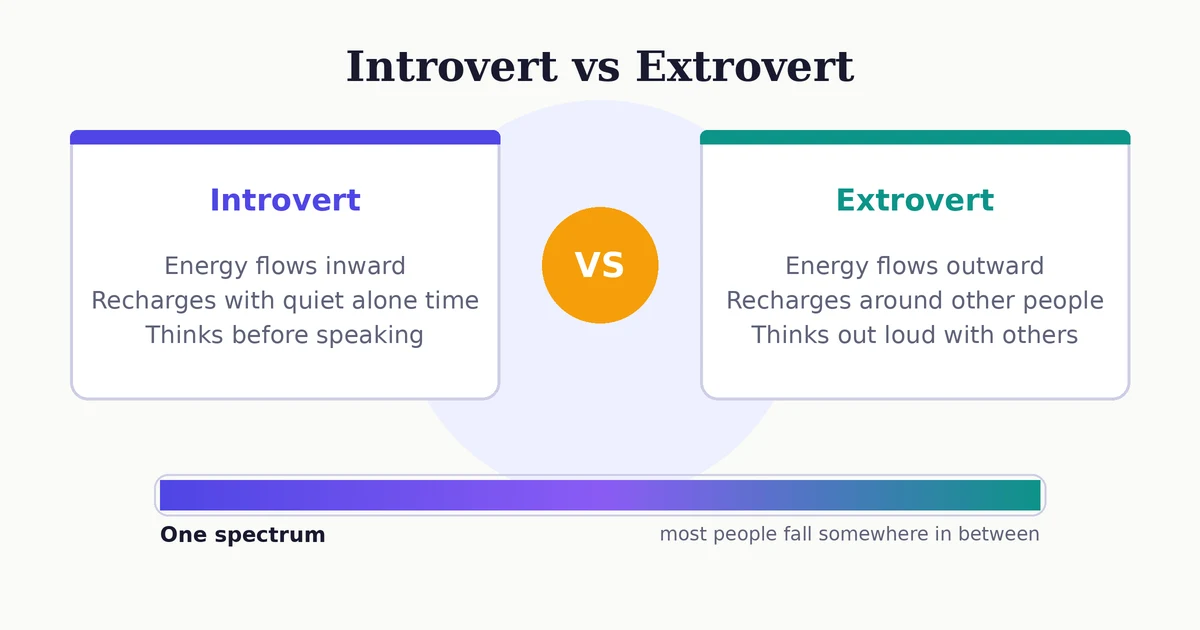
Comparison diagram showing an introvert whose energy flows inward and recharges with quiet alone time, versus an extrovert whose energy flows outward and recharges around other people, on one spectrum

Introvert vs Extrovert: Key Differences Explained

October 2, 2026 by Waqar

The real difference between introverts and extroverts isn’t shyness versus confidence — it’s orientation. An introvert’s energy flows inward, toward the private world of thoughts …
Read More →

Categories Personality Psychology
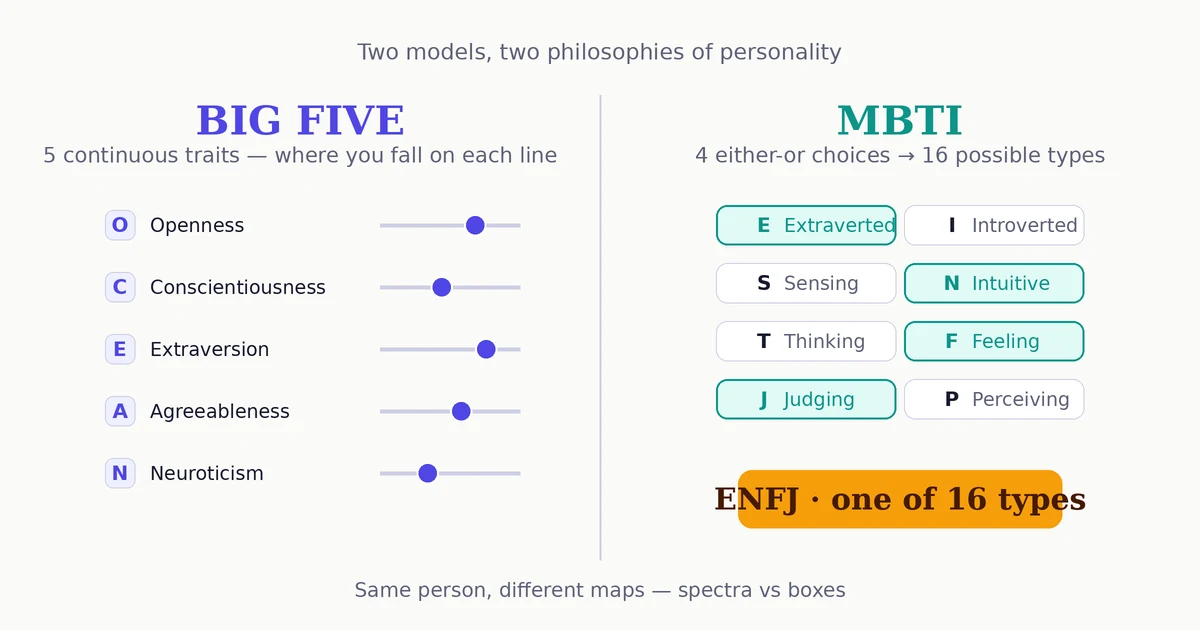
Split comparison diagram: the Big Five's five trait sliders versus MBTI's four either-or preference switches producing a type code like ENFJ

Big Five vs MBTI: How Are They Different?

October 2, 2026 by Waqar

The Big Five describes your personality as five continuous traits — openness, conscientiousness, extraversion, agreeableness, and neuroticism. MBTI sorts you into one of 16 types, …
Read More →

Categories Personality Psychology
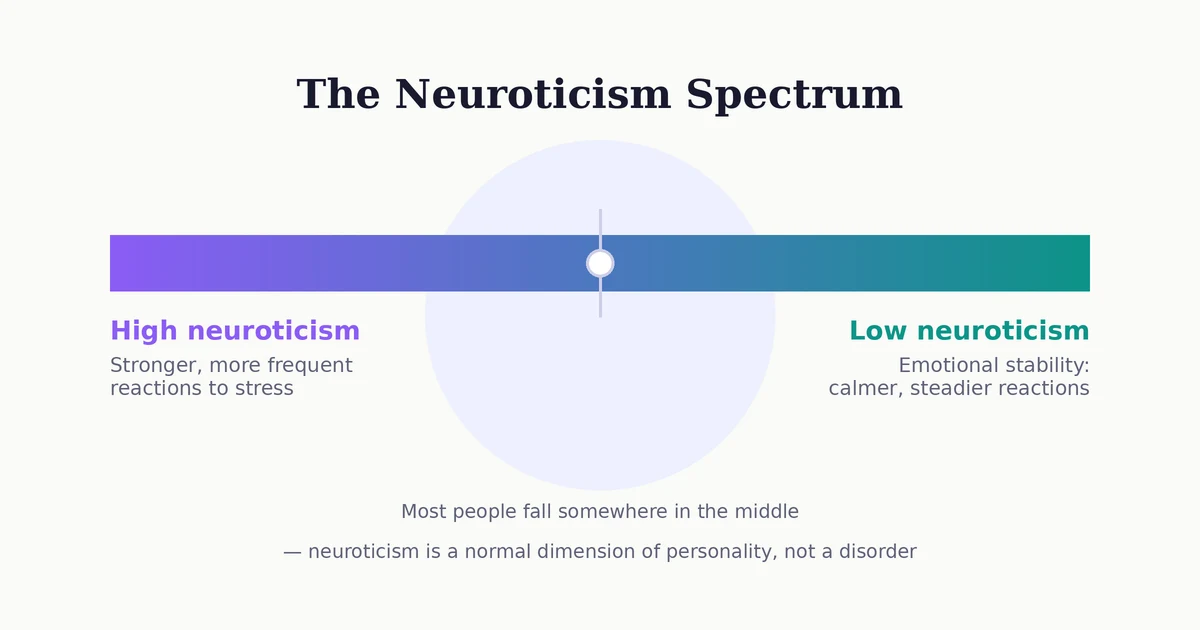
Diagram of the neuroticism spectrum, from high neuroticism with strong frequent reactions to stress, to low neuroticism, also called emotional stability, with calm steady reactions

Neuroticism: Meaning, Signs & Examples

October 2, 2026 by Waqar

Neuroticism is the personality trait that describes how strongly a person reacts to life’s challenges with negative emotions — worry, sadness, frustration, self-consciousness, or irritability. …

Read More →

Categories Personality Psychology
Older posts
Page1 Page2 Next →

Recent Posts

  • Illustration of a bookshelf holding personality psychology books in indigo, teal, amber, and violet, with the words Best Personality Psychology BooksBest Personality Psychology Books
  • Five colorful cards showing the Big Five personality traits: Openness, Conscientiousness, Extraversion, Agreeableness, and NeuroticismBig Five Personality Test
  • Original concept diagram mapping five trait patterns — openness, conscientiousness, extraversion, agreeableness, emotional stability — to typical workplace strengthsPersonality and Career: How Traits Shape Your Work Life
  • Illustration of a winding path rising gently through adolescence, young adulthood, middle adulthood, and later life, showing that personality change is gradualCan Your Personality Change? What Research Says
  • Original diagram comparing personality traits as spectrum sliders with percentile scores against personality types as 16 category boxes, with one type highlightedPersonality Traits vs Personality Types: What’s the Difference?
  • Diagram with three cards summarizing the MBTI with 16 types, the Enneagram with 9 types, and DISC with 4 styles, under the heading 'Frameworks that sort people into categories'Personality Types Explained: MBTI, Enneagram & More
  • About
  • Contact
  • Privacy Policy
  • Terms of Service
  • Disclaimer
© 2026 Psychology Connections • Built with GeneratePress