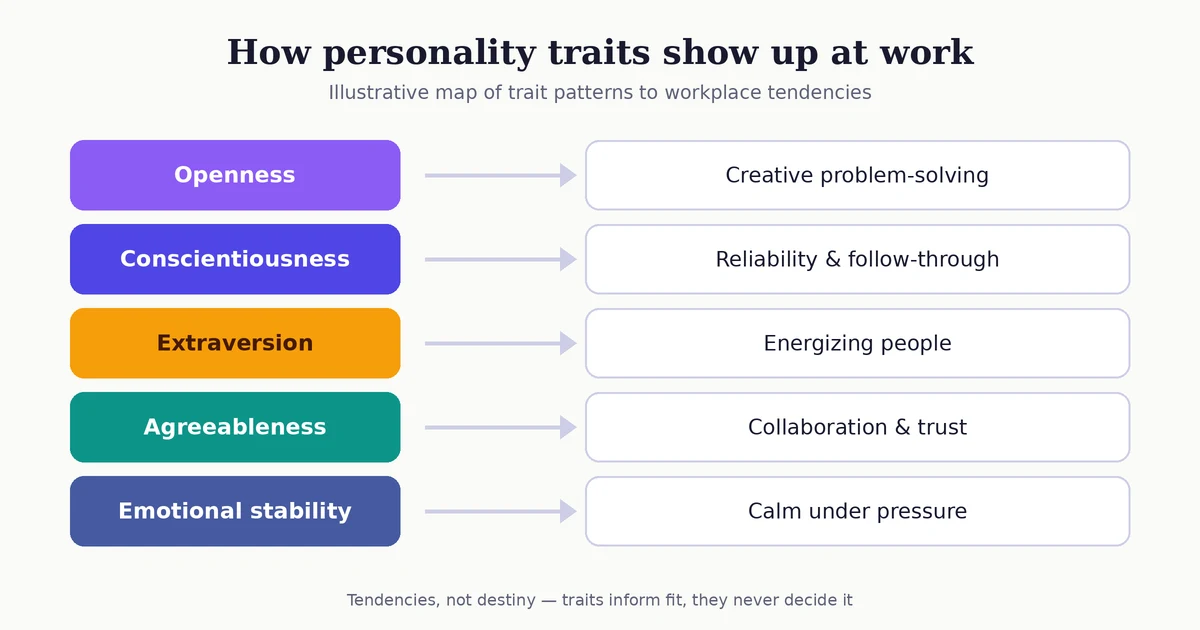
Personality and Career: How Traits Shape Your Work Life
Your personality doesn’t decide your career — but it quietly shapes how you work. Two people can hold the same job title and do it …

Your personality doesn’t decide your career — but it quietly shapes how you work. Two people can hold the same job title and do it …
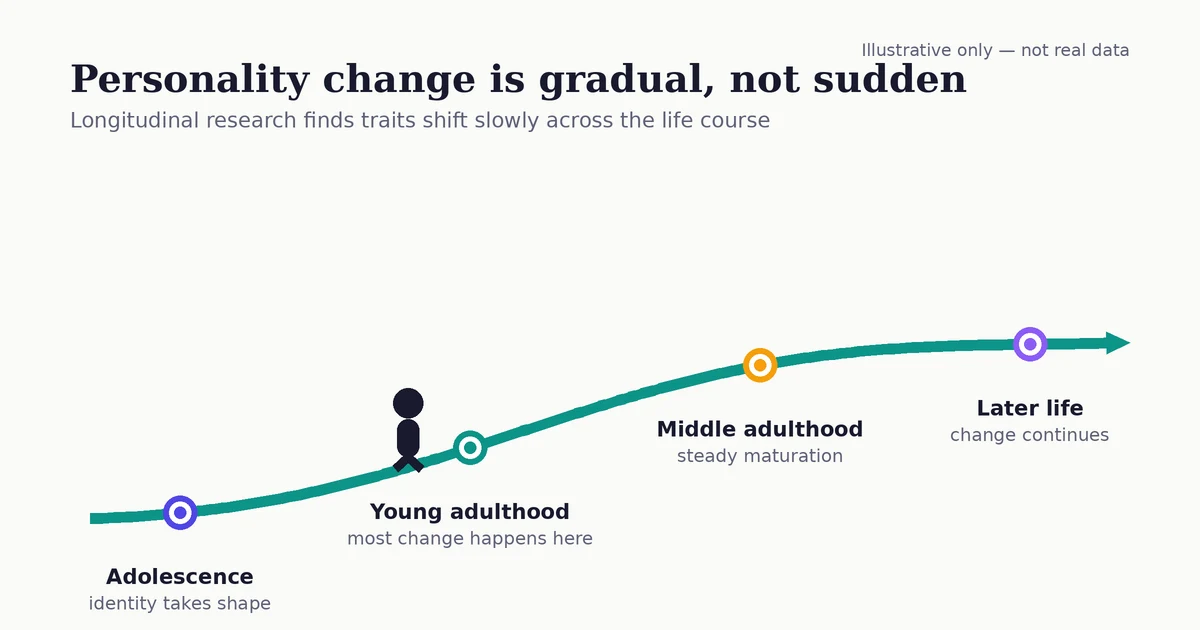
Yes — but slowly, and not in the dramatic way movies suggest. Decades of longitudinal research, which follows the same people for years and measures …
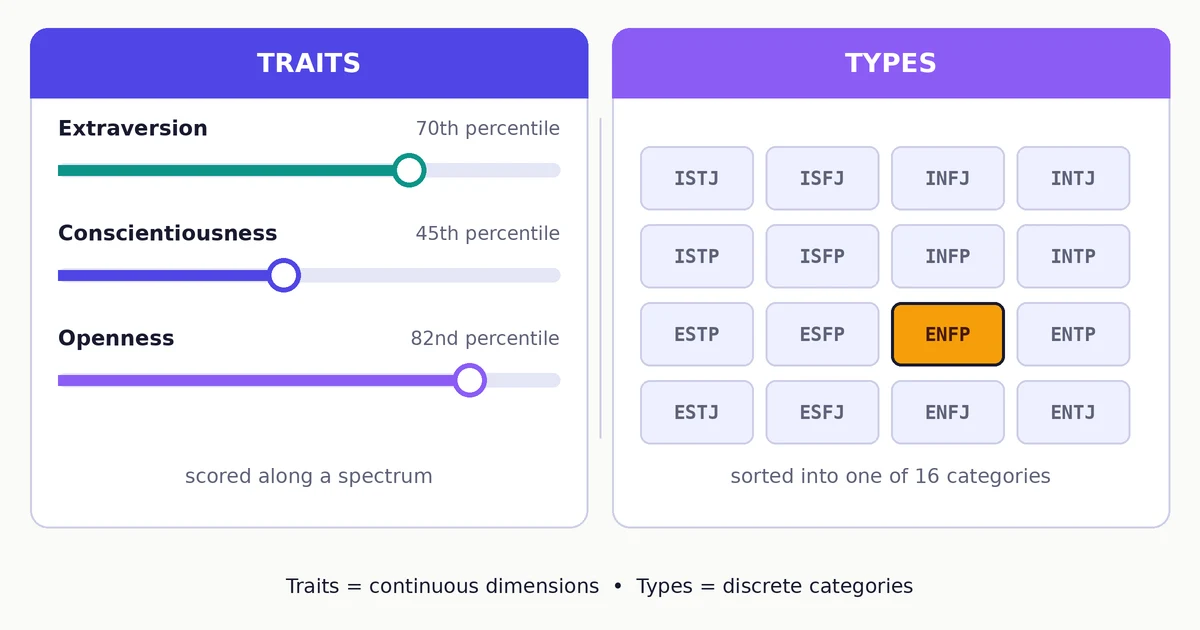
The difference is simple: traits describe you as a point on a sliding scale, while types sort you into a box. A trait framework says …
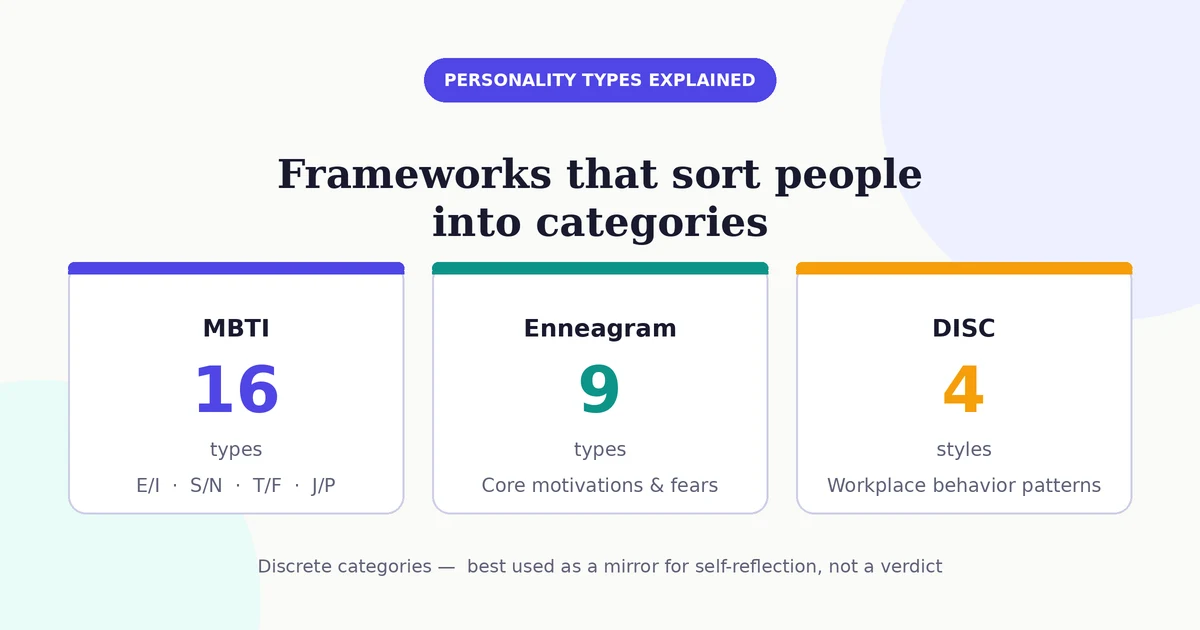
A personality type framework sorts people into discrete categories. Take the MBTI and you come out as one of 16 four-letter types, like INTJ or …
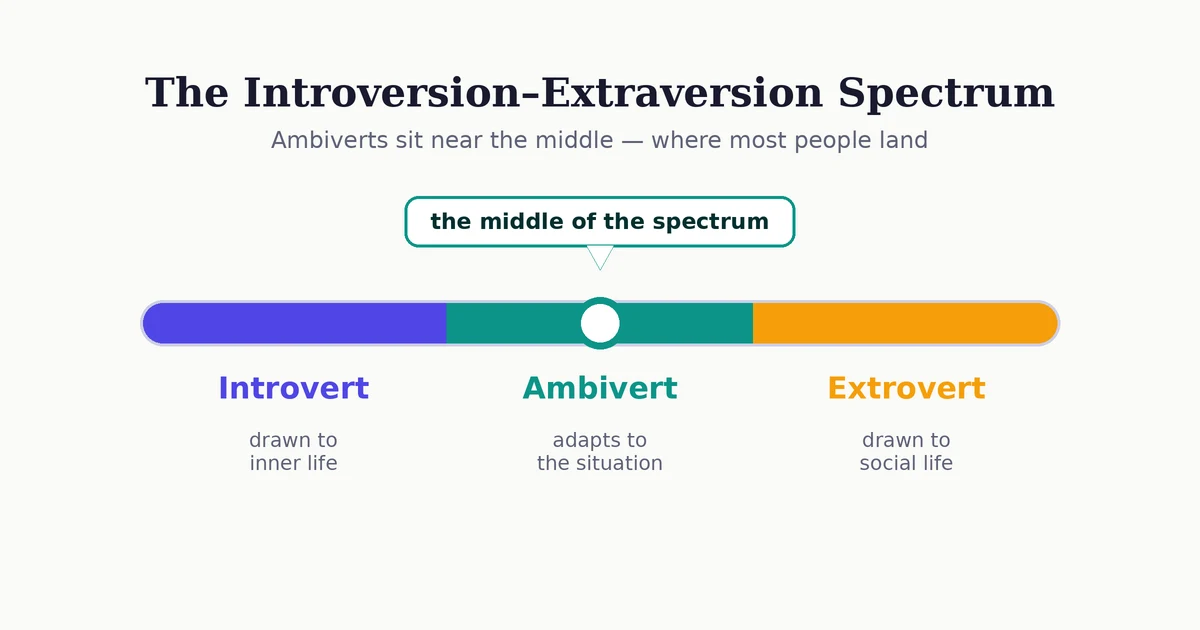
An ambivert is someone who sits near the middle of the introversion–extraversion spectrum — a person with a balance of introvert and extrovert qualities, who …
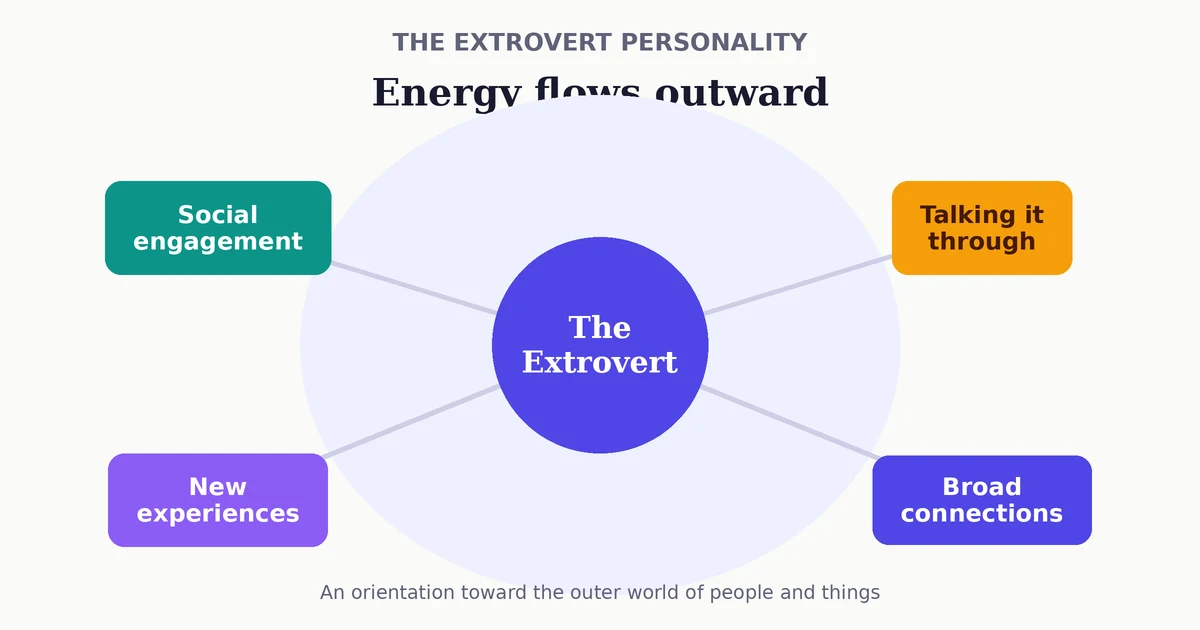
An extrovert is someone whose energy and attention naturally point outward — toward people, activities, conversation, and the buzz of the world around them. Social …
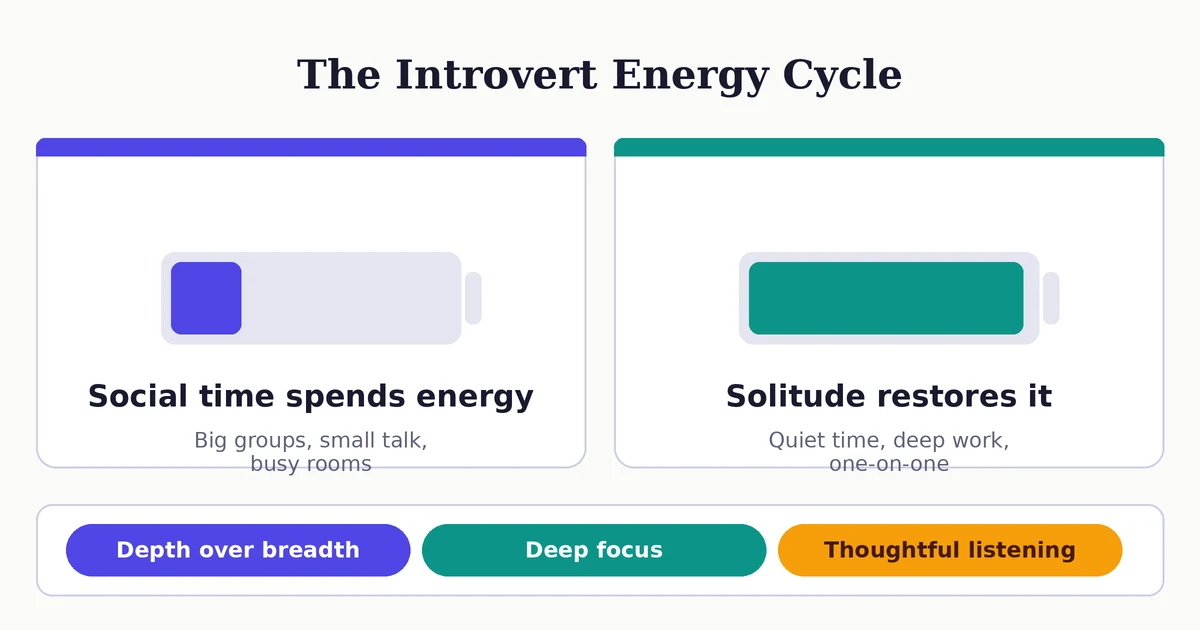
An introvert personality describes someone who is oriented toward their inner world — their thoughts, feelings, and ideas — rather than toward the outer world …
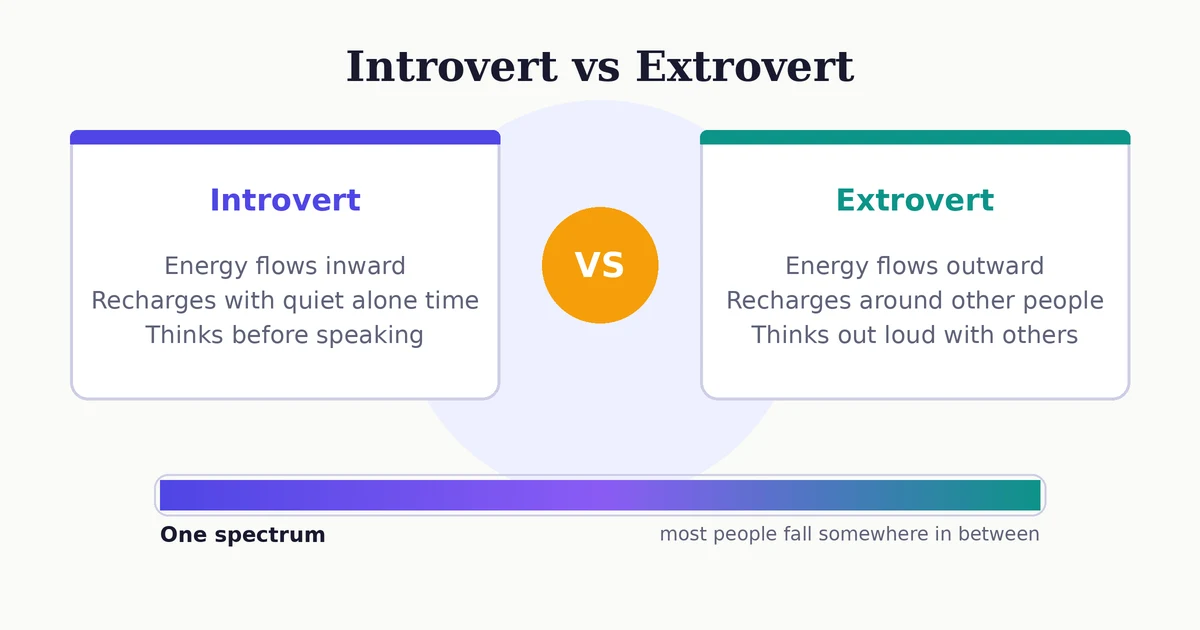
The real difference between introverts and extroverts isn’t shyness versus confidence — it’s orientation. An introvert’s energy flows inward, toward the private world of thoughts …
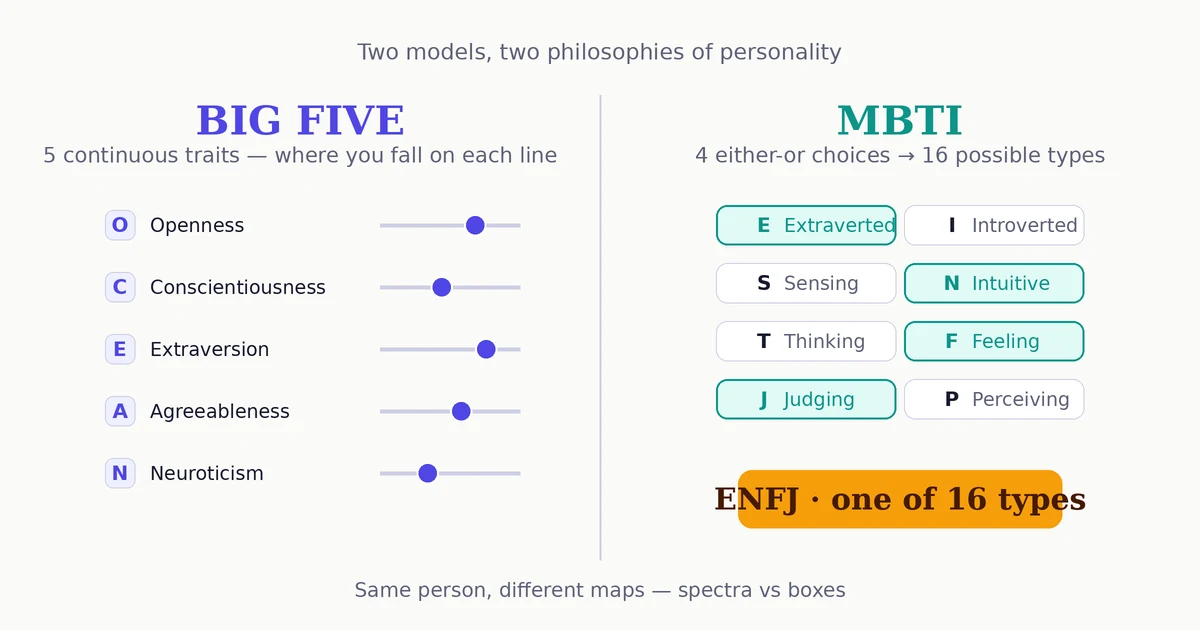
The Big Five describes your personality as five continuous traits — openness, conscientiousness, extraversion, agreeableness, and neuroticism. MBTI sorts you into one of 16 types, …
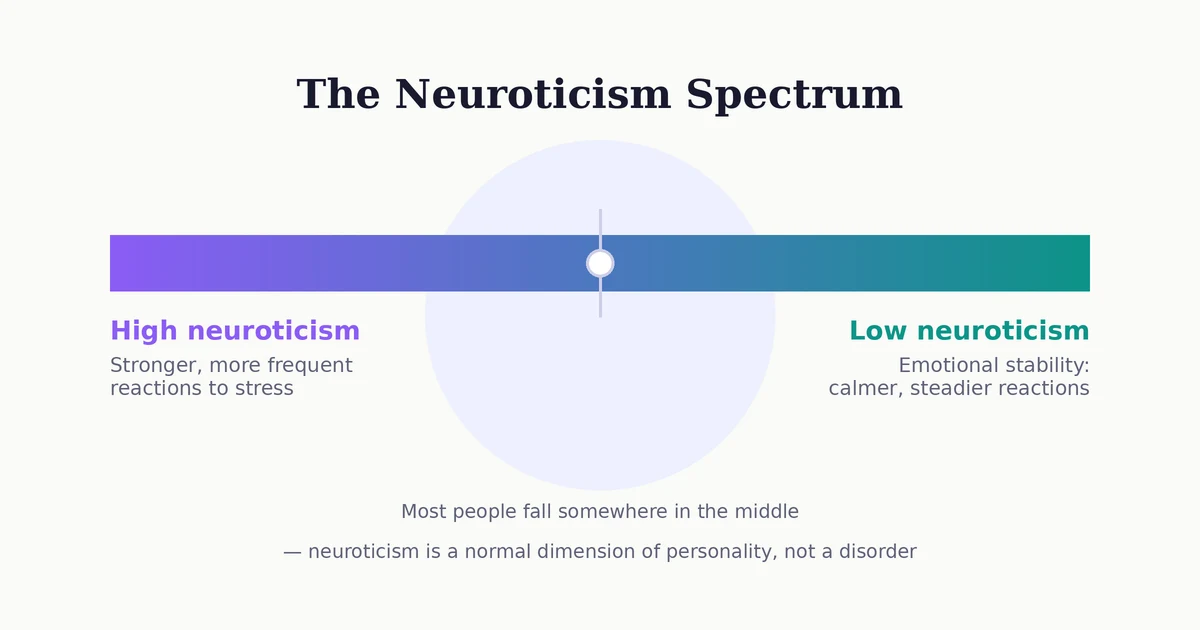
Neuroticism is the personality trait that describes how strongly a person reacts to life’s challenges with negative emotions — worry, sadness, frustration, self-consciousness, or irritability. …