Skip to content
Psychology Connections
  • Psychology
  • Quizzes & Tests
  • Books
  • Dictionary
  • About
  • Contact

Psychology

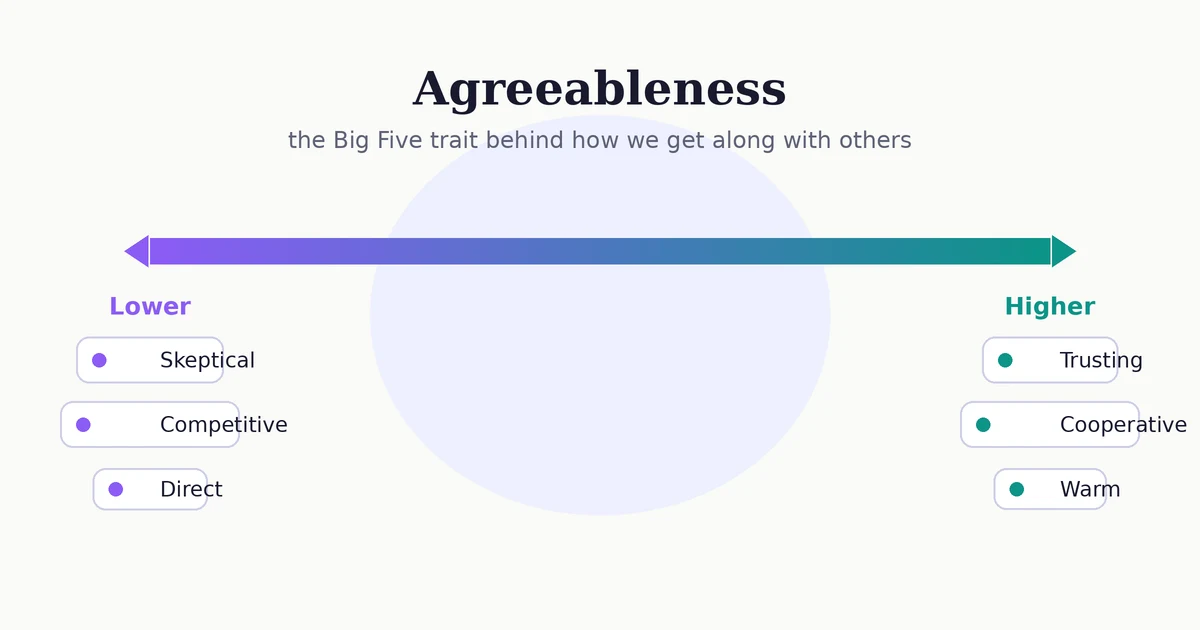
Diagram showing the agreeableness spectrum from lower to higher, with signs like skeptical and competitive on the lower end and trusting and cooperative on the higher end

Agreeableness: Meaning, Signs & Examples

Agreeableness is the personality trait behind how warmly and cooperatively we deal with other people. If you’ve ever wondered why …

Read More →

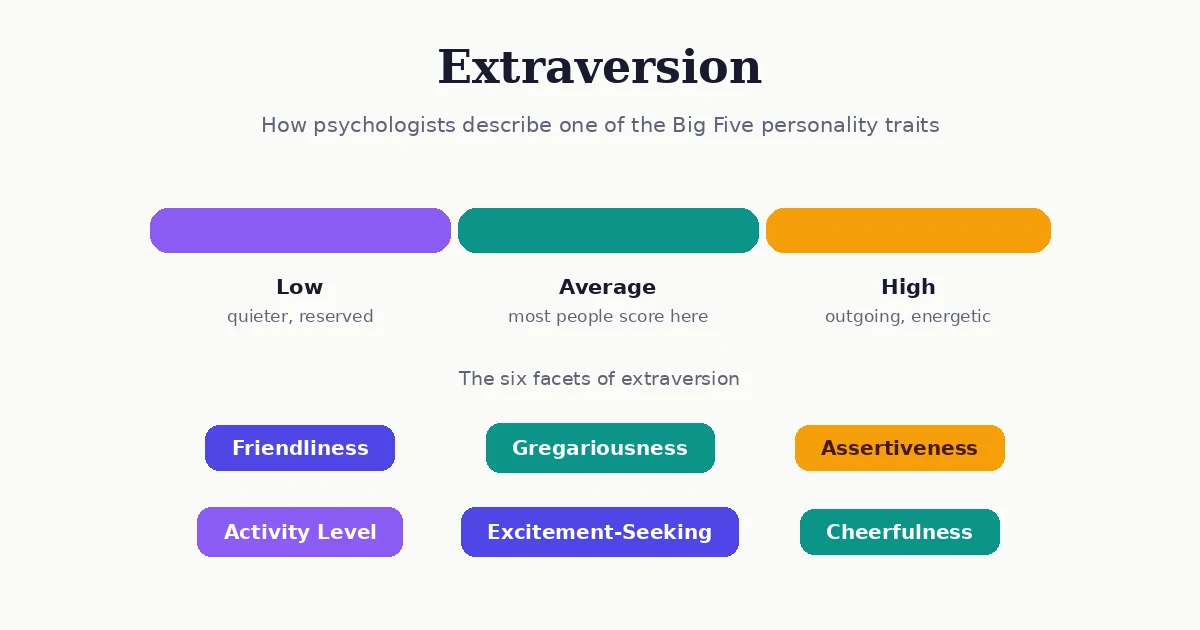
Spectrum diagram of extraversion from low to high, noting most people score near the middle, with its six facets: friendliness, gregariousness, assertiveness, activity level, excitement-seeking, and cheerfulness

Extraversion: The Big Five Trait Explained

Extraversion is one of the five broad personality traits psychologists use to describe how people differ. In simple terms, it …
Read More →

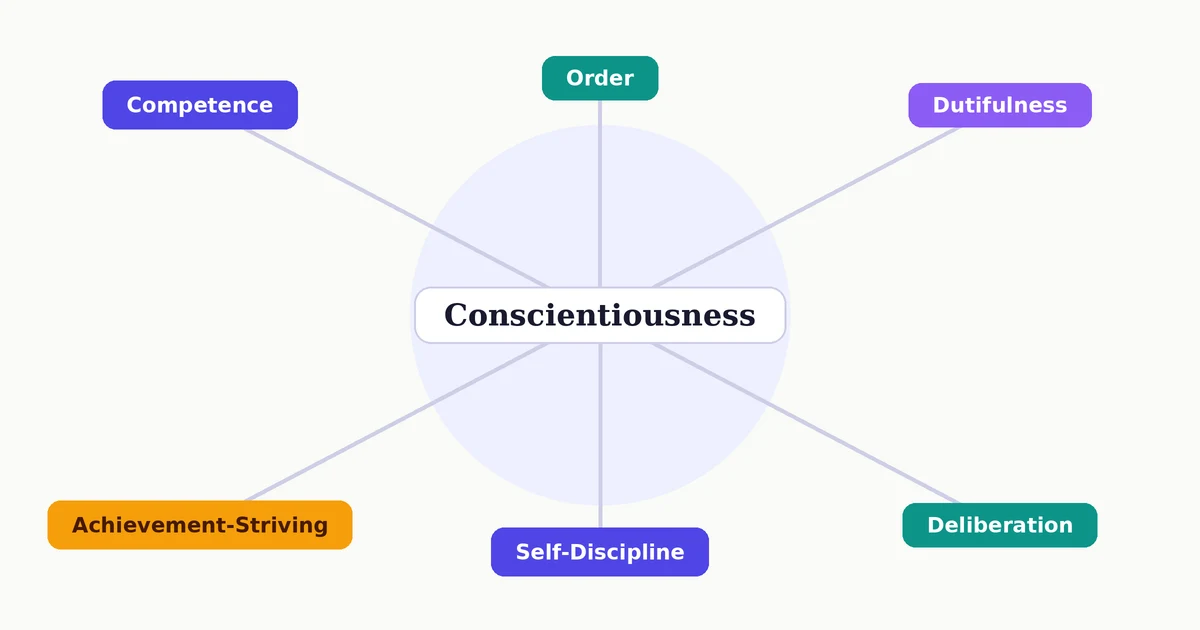
Diagram of the six facets of conscientiousness: competence, order, dutifulness, achievement-striving, self-discipline, and deliberation

Conscientiousness: Meaning, Signs & Examples

Conscientiousness is the personality trait of being responsible, careful, and diligent — the tendency to be organized, self-disciplined, and driven …
Read More →

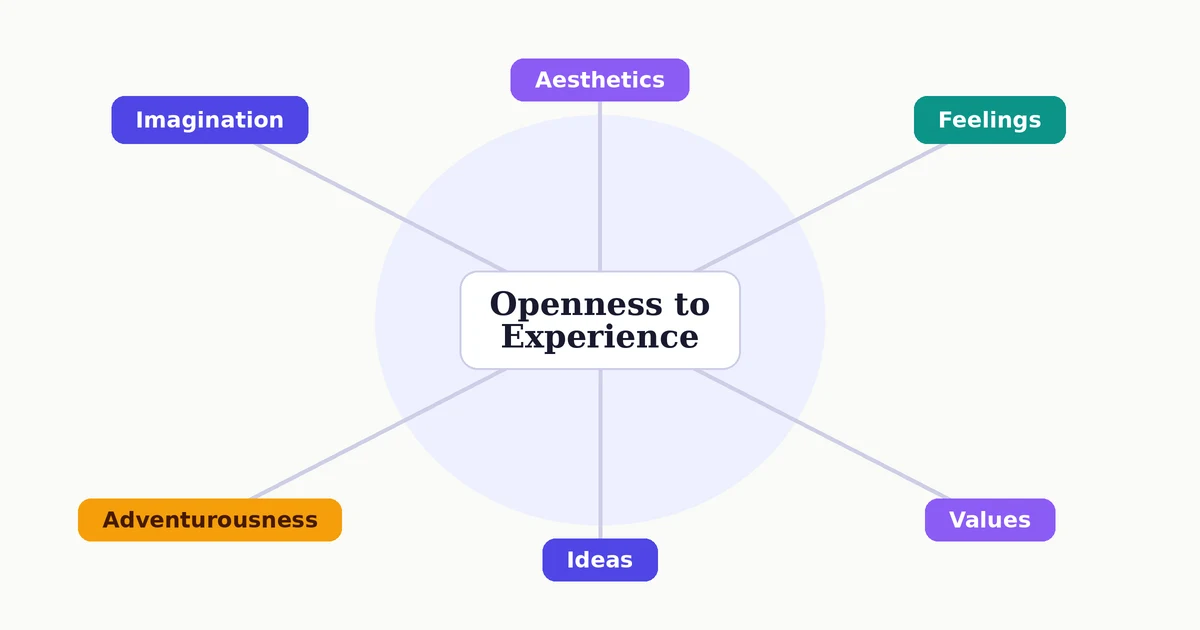
Diagram of openness to experience and its six facets: imagination, aesthetics, feelings, adventurousness, ideas, and values

Openness to Experience: Meaning, Signs & Examples

Openness to experience — usually shortened to just openness — is the personality trait that describes how receptive you are …
Read More →

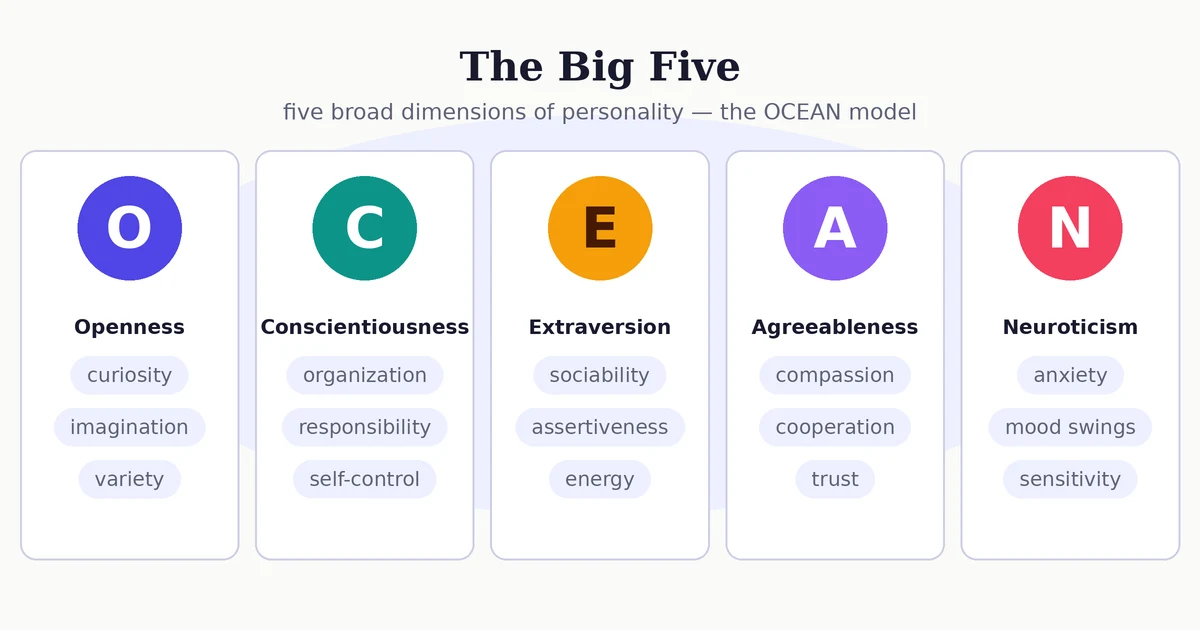
Diagram of the Big Five OCEAN model: five cards for Openness, Conscientiousness, Extraversion, Agreeableness, and Neuroticism, each listing key facet words

Big Five Personality Traits: The OCEAN Model Explained

The Big Five — also called the five-factor model — is a widely used framework in personality psychology for describing …
Read More →

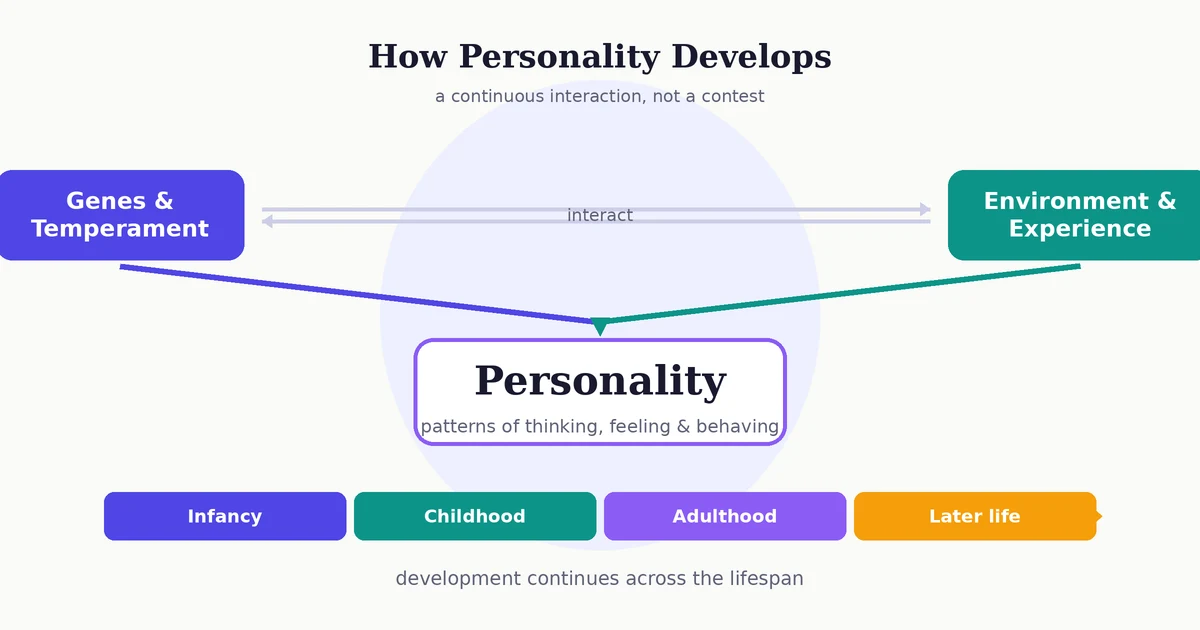
Diagram showing how personality develops: genes and temperament interact with environment and experience across the lifespan to shape personality

How Personality Develops: Nature, Nurture & Childhood

Your personality was not decided at birth — and it was not stamped onto you by your upbringing, either. It …
Read More →

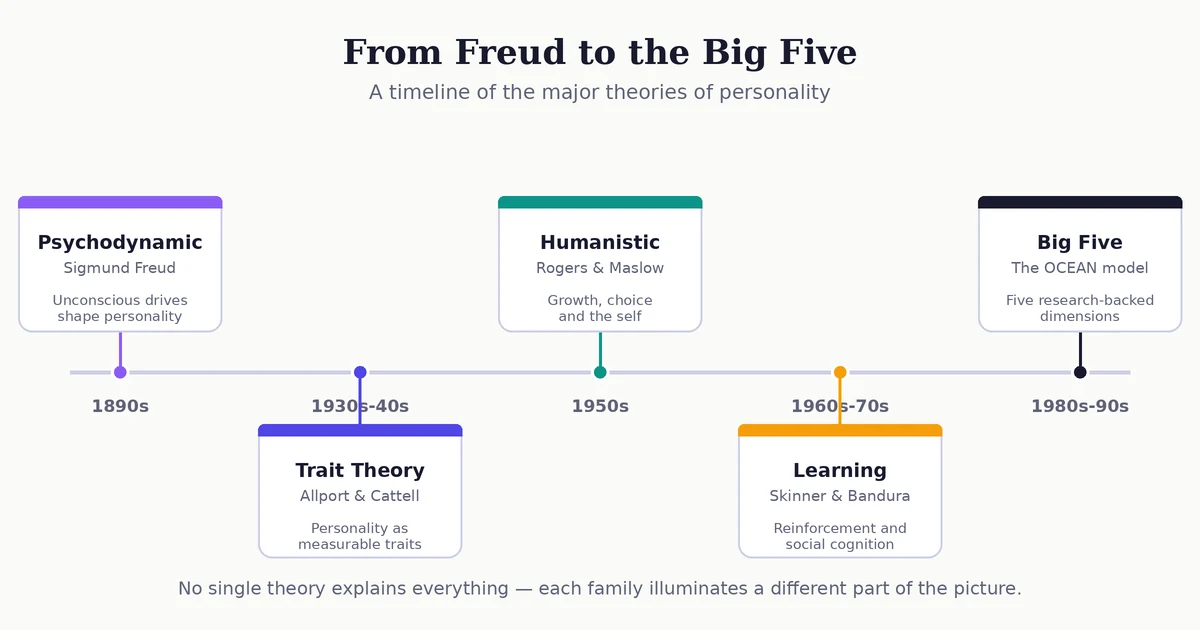
Timeline of the major theories of personality: psychodynamic (1890s), trait theory (1930s-40s), humanistic (1950s), learning (1960s-70s), and the Big Five (1980s-90s)

Major Theories of Personality: From Freud to the Big Five

Why do people behave the way they do? Over more than a century, psychologists have answered that question with at …
Read More →

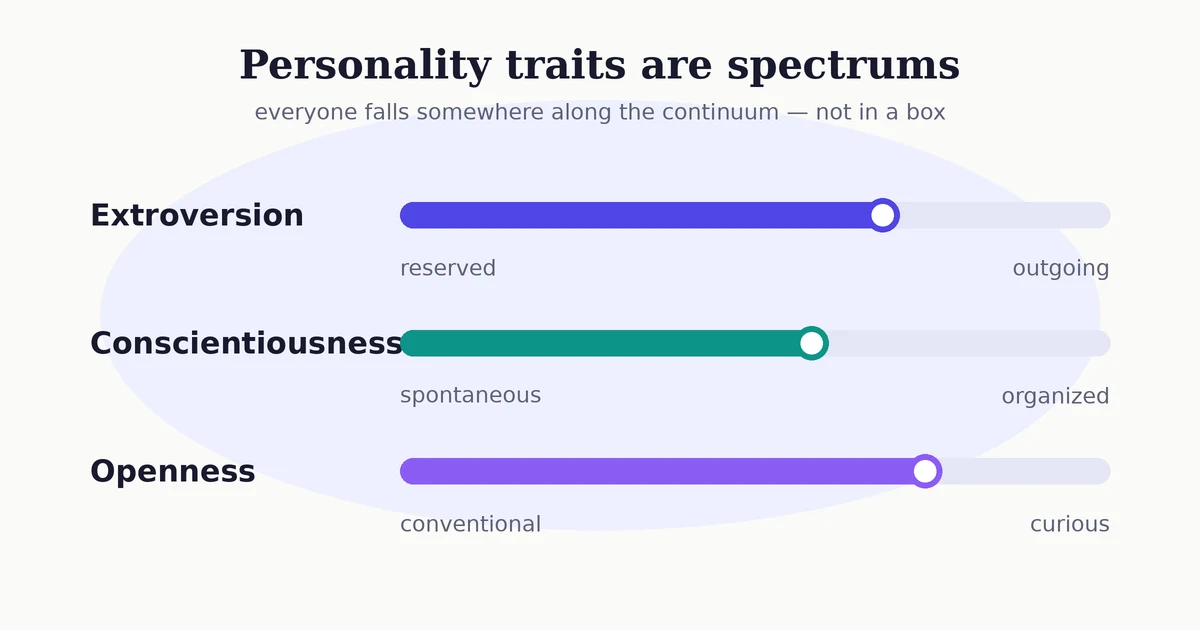
Diagram of personality traits as spectrums: continuum bars showing reserved to outgoing, spontaneous to organized, and conventional to curious

Personality Traits: Meaning, List & Examples

A personality trait is an enduring pattern in how a person typically thinks, feels, and behaves. It’s the reason your …
Read More →

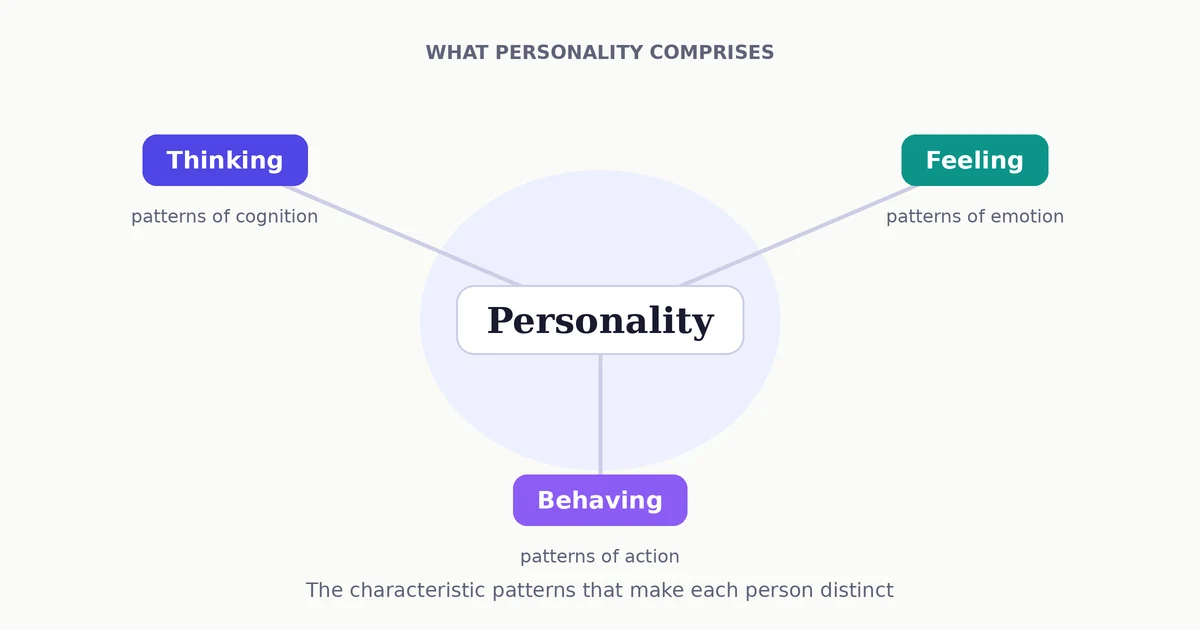
Diagram showing personality as three branches: patterns of thinking, feeling, and behaving

What Is Personality? Definition & Key Concepts

Personality is the characteristic pattern of how you think, feel, and behave — the tendencies that make your reactions recognizably …
Read More →

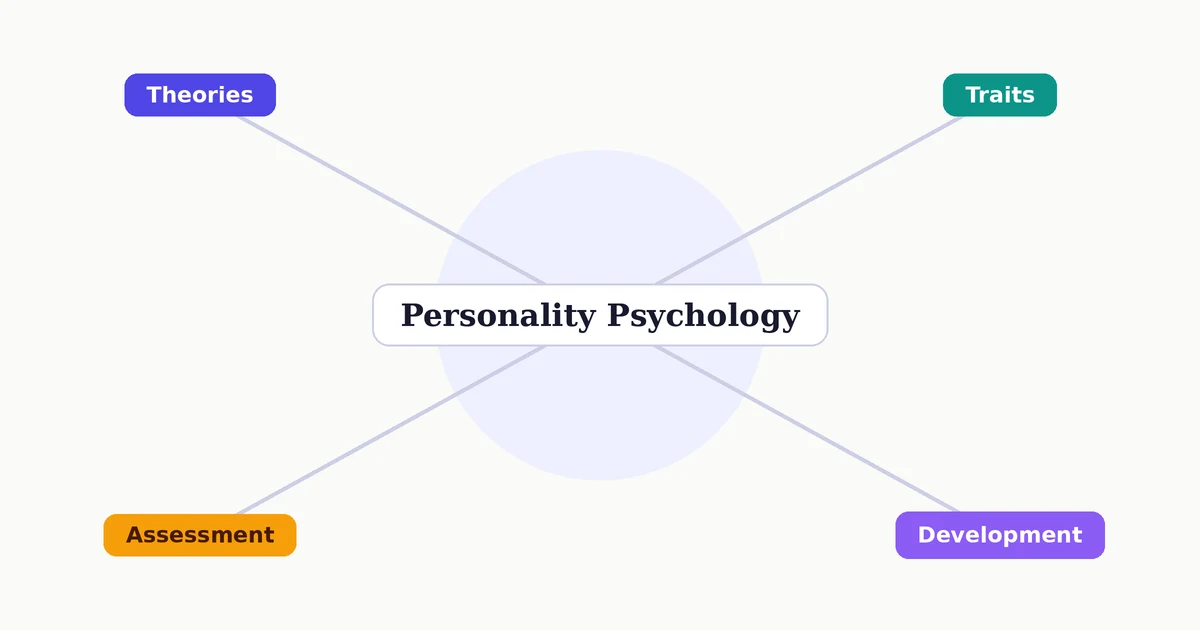
Diagram mapping personality psychology into four areas: theories, traits, assessment, and development

What Is Personality Psychology? The Complete Guide

Personality psychology is the branch of psychology that studies individual differences — the patterns in how people think, feel, and …

Read More →

Newer posts
← Previous Page1 Page2

Recent Posts

  • Illustration of a bookshelf holding personality psychology books in indigo, teal, amber, and violet, with the words Best Personality Psychology BooksBest Personality Psychology Books
  • Five colorful cards showing the Big Five personality traits: Openness, Conscientiousness, Extraversion, Agreeableness, and NeuroticismBig Five Personality Test
  • Original concept diagram mapping five trait patterns — openness, conscientiousness, extraversion, agreeableness, emotional stability — to typical workplace strengthsPersonality and Career: How Traits Shape Your Work Life
  • Illustration of a winding path rising gently through adolescence, young adulthood, middle adulthood, and later life, showing that personality change is gradualCan Your Personality Change? What Research Says
  • Original diagram comparing personality traits as spectrum sliders with percentile scores against personality types as 16 category boxes, with one type highlightedPersonality Traits vs Personality Types: What’s the Difference?
  • Diagram with three cards summarizing the MBTI with 16 types, the Enneagram with 9 types, and DISC with 4 styles, under the heading 'Frameworks that sort people into categories'Personality Types Explained: MBTI, Enneagram & More
  • About
  • Contact
  • Privacy Policy
  • Terms of Service
  • Disclaimer
© 2026 Psychology Connections • Built with GeneratePress