Skip to content
Psychology Connections
  • Psychology
  • Quizzes & Tests
  • Books
  • Dictionary
  • About
  • Contact

Personality Psychology

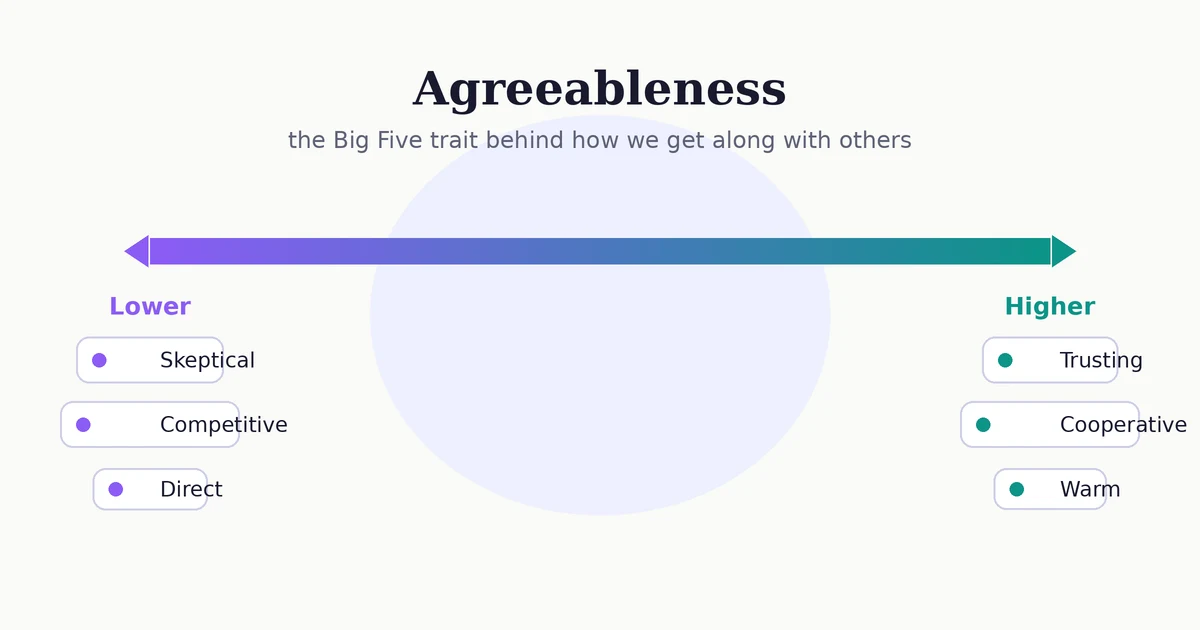
Diagram showing the agreeableness spectrum from lower to higher, with signs like skeptical and competitive on the lower end and trusting and cooperative on the higher end

Agreeableness: Meaning, Signs & Examples

Agreeableness is the personality trait behind how warmly and cooperatively we deal with other people. If you’ve ever wondered why …

Read More →

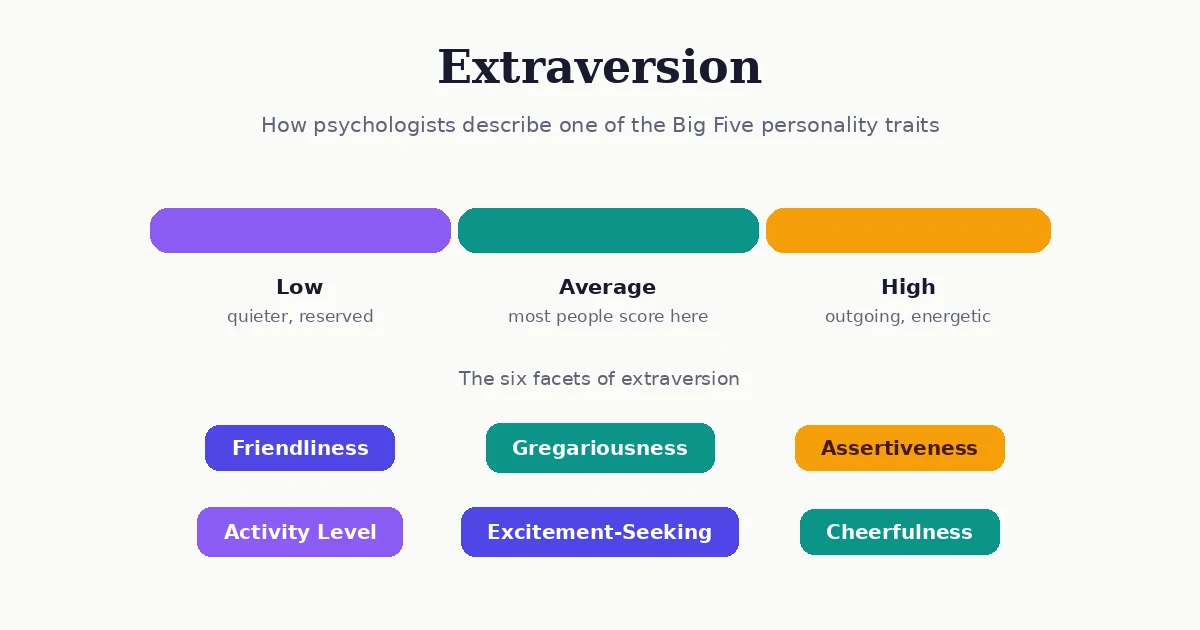
Spectrum diagram of extraversion from low to high, noting most people score near the middle, with its six facets: friendliness, gregariousness, assertiveness, activity level, excitement-seeking, and cheerfulness

Extraversion: The Big Five Trait Explained

Extraversion is one of the five broad personality traits psychologists use to describe how people differ. In simple terms, it …
Read More →

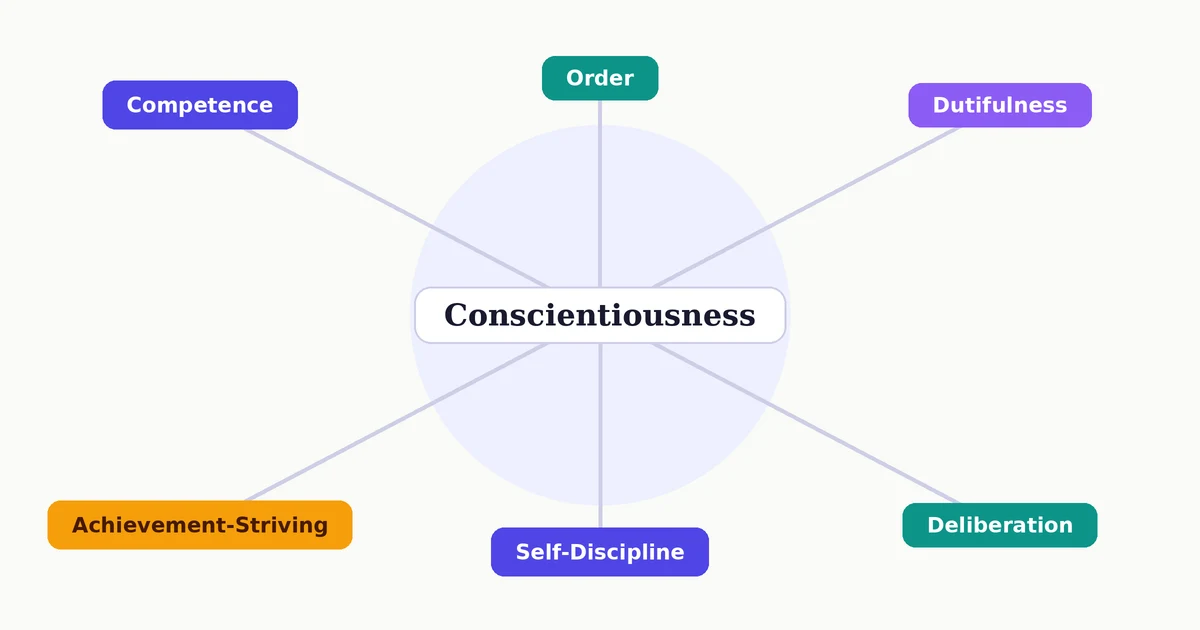
Diagram of the six facets of conscientiousness: competence, order, dutifulness, achievement-striving, self-discipline, and deliberation

Conscientiousness: Meaning, Signs & Examples

Conscientiousness is the personality trait of being responsible, careful, and diligent — the tendency to be organized, self-disciplined, and driven …
Read More →

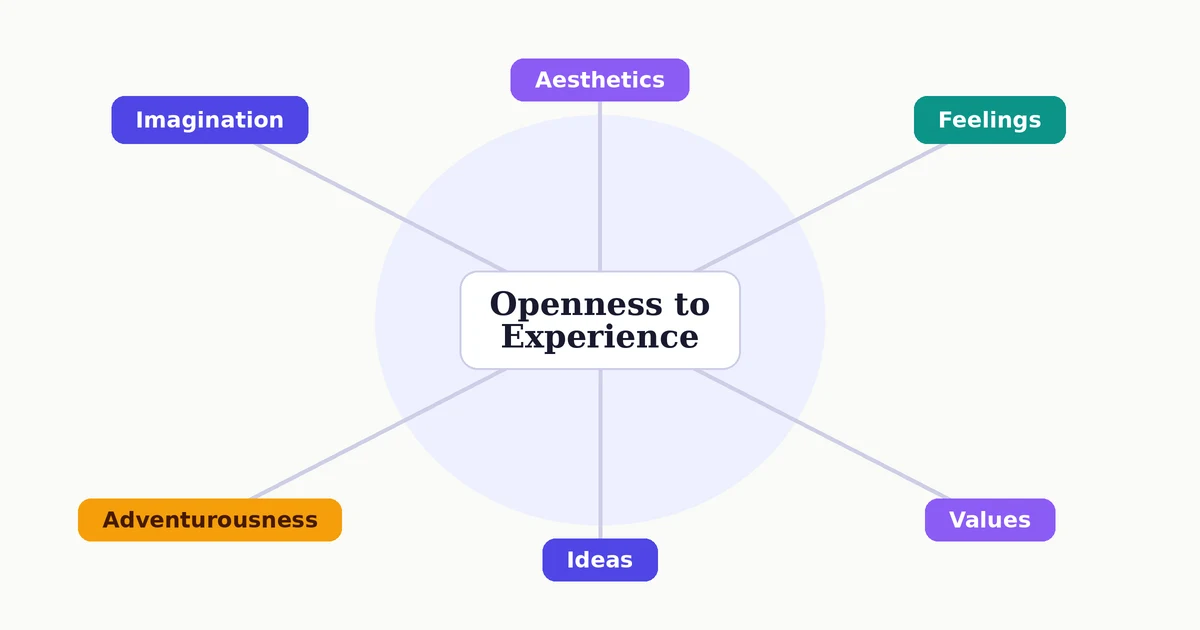
Diagram of openness to experience and its six facets: imagination, aesthetics, feelings, adventurousness, ideas, and values

Openness to Experience: Meaning, Signs & Examples

Openness to experience — usually shortened to just openness — is the personality trait that describes how receptive you are …
Read More →

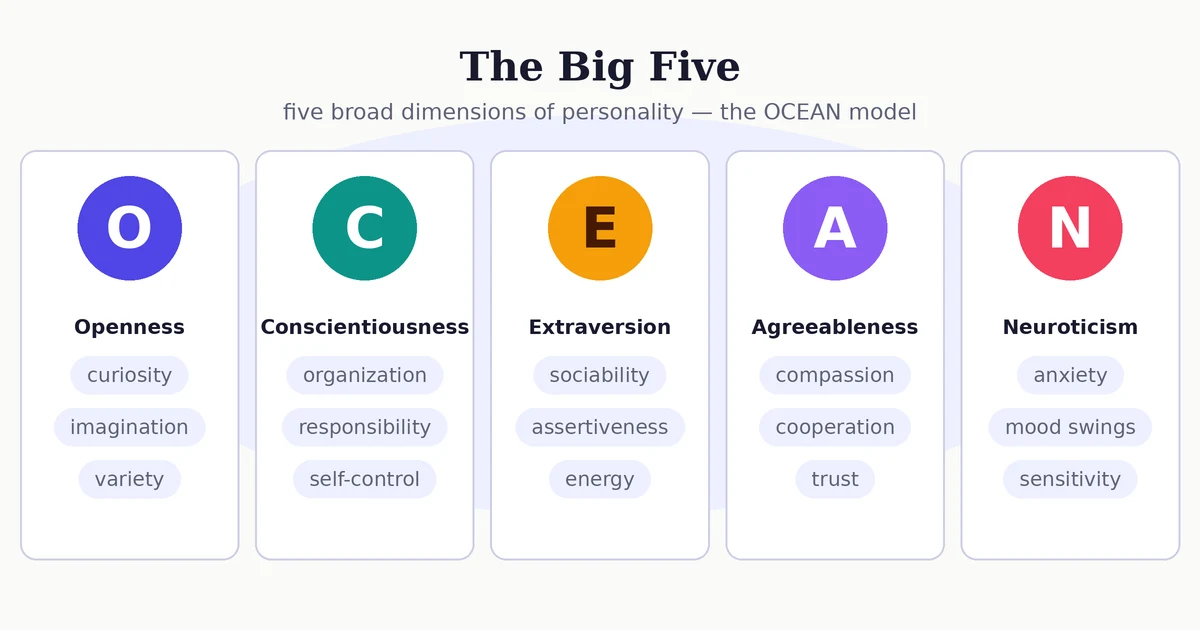
Diagram of the Big Five OCEAN model: five cards for Openness, Conscientiousness, Extraversion, Agreeableness, and Neuroticism, each listing key facet words

Big Five Personality Traits: The OCEAN Model Explained

The Big Five — also called the five-factor model — is a widely used framework in personality psychology for describing …
Read More →

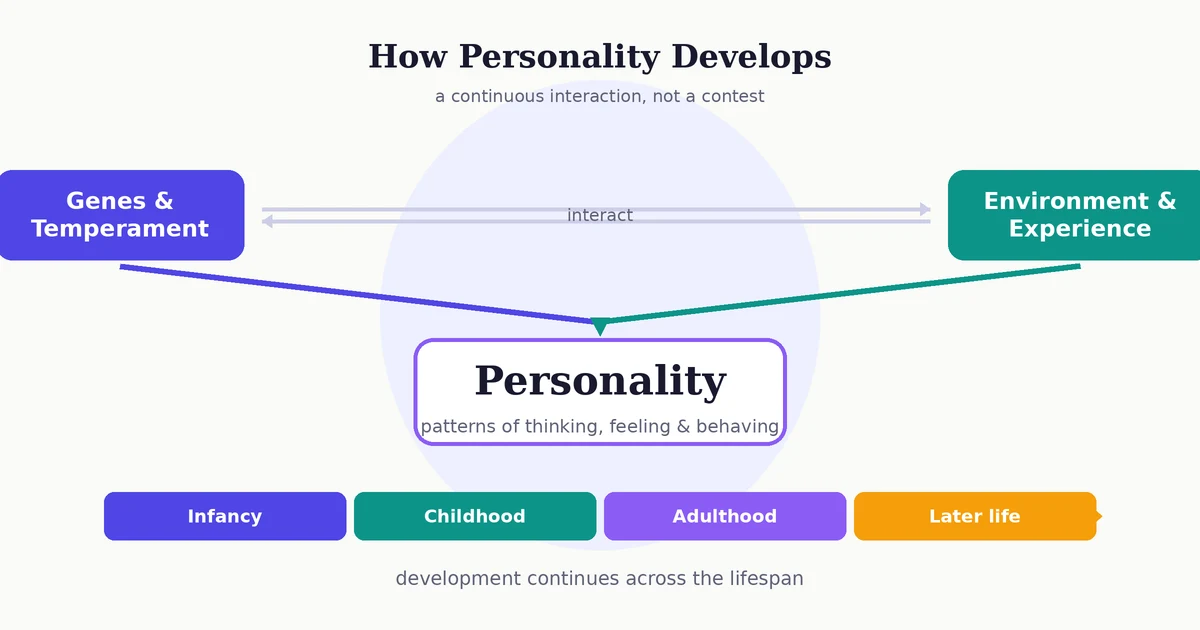
Diagram showing how personality develops: genes and temperament interact with environment and experience across the lifespan to shape personality

How Personality Develops: Nature, Nurture & Childhood

Your personality was not decided at birth — and it was not stamped onto you by your upbringing, either. It …
Read More →

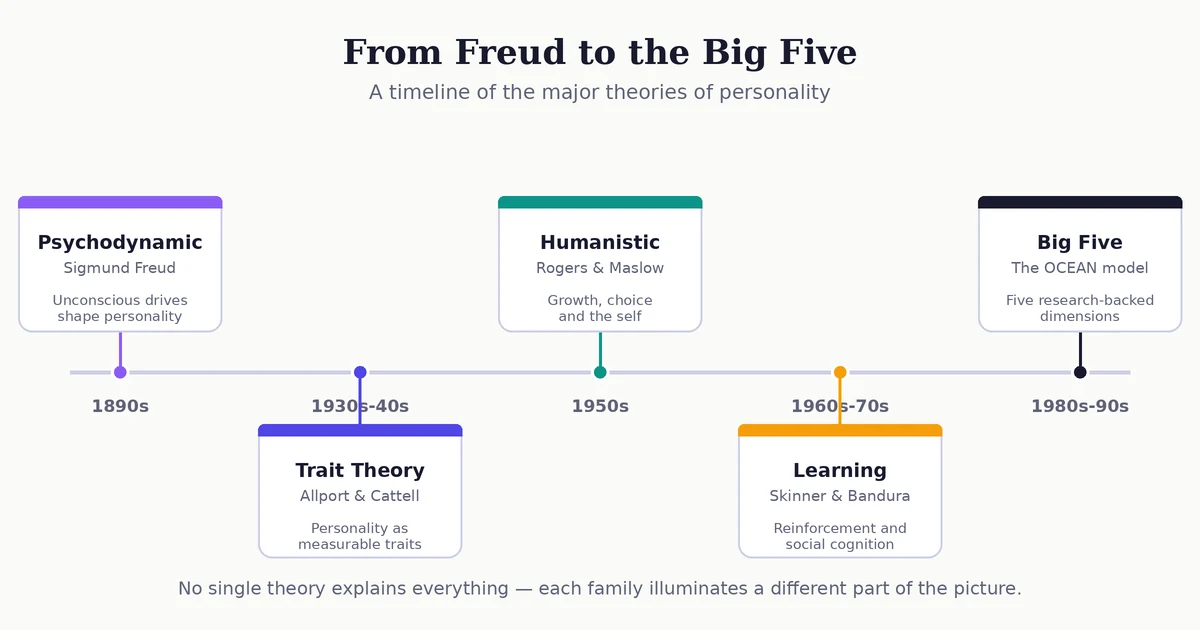
Timeline of the major theories of personality: psychodynamic (1890s), trait theory (1930s-40s), humanistic (1950s), learning (1960s-70s), and the Big Five (1980s-90s)

Major Theories of Personality: From Freud to the Big Five

Why do people behave the way they do? Over more than a century, psychologists have answered that question with at …
Read More →

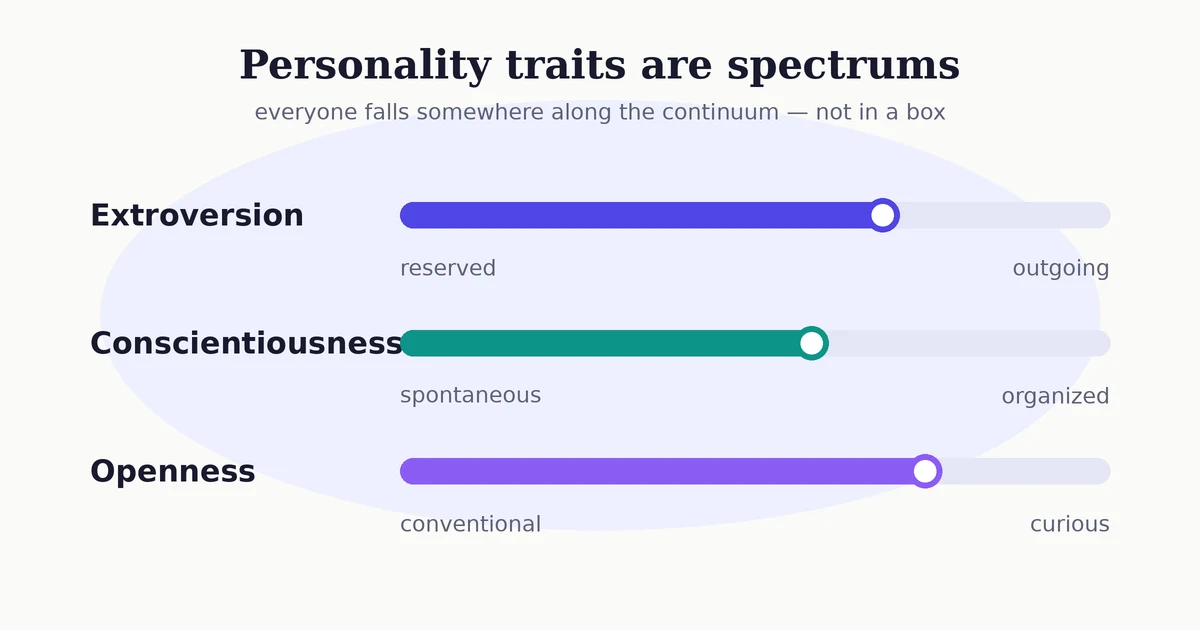
Diagram of personality traits as spectrums: continuum bars showing reserved to outgoing, spontaneous to organized, and conventional to curious

Personality Traits: Meaning, List & Examples

A personality trait is an enduring pattern in how a person typically thinks, feels, and behaves. It’s the reason your …
Read More →

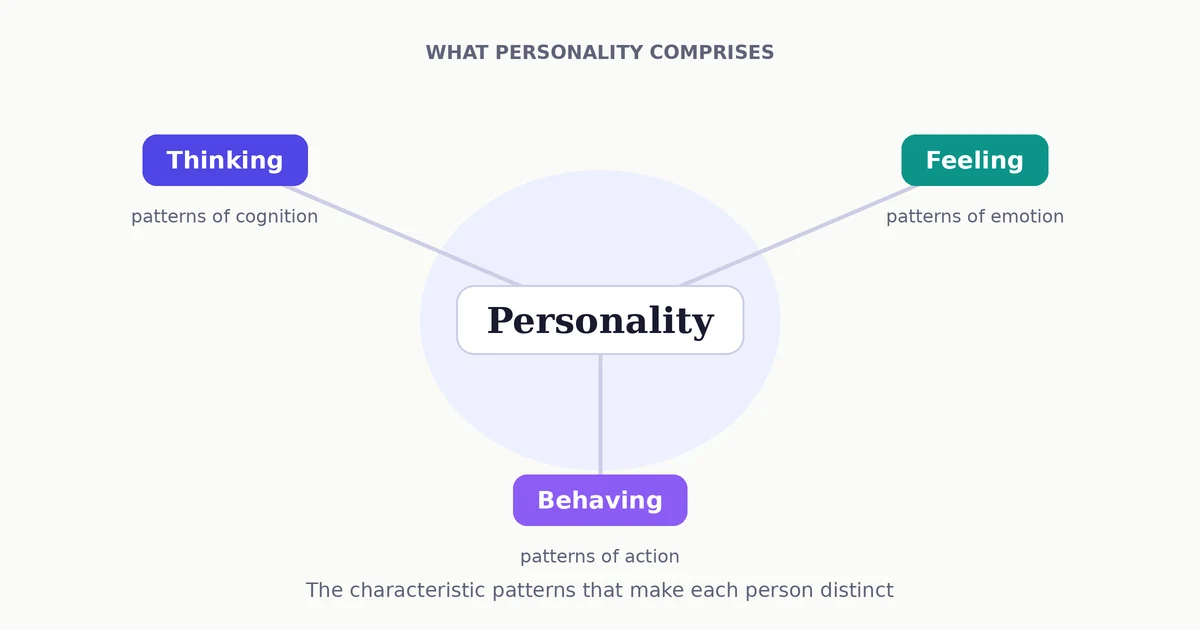
Diagram showing personality as three branches: patterns of thinking, feeling, and behaving

What Is Personality? Definition & Key Concepts

Personality is the characteristic pattern of how you think, feel, and behave — the tendencies that make your reactions recognizably …
Read More →

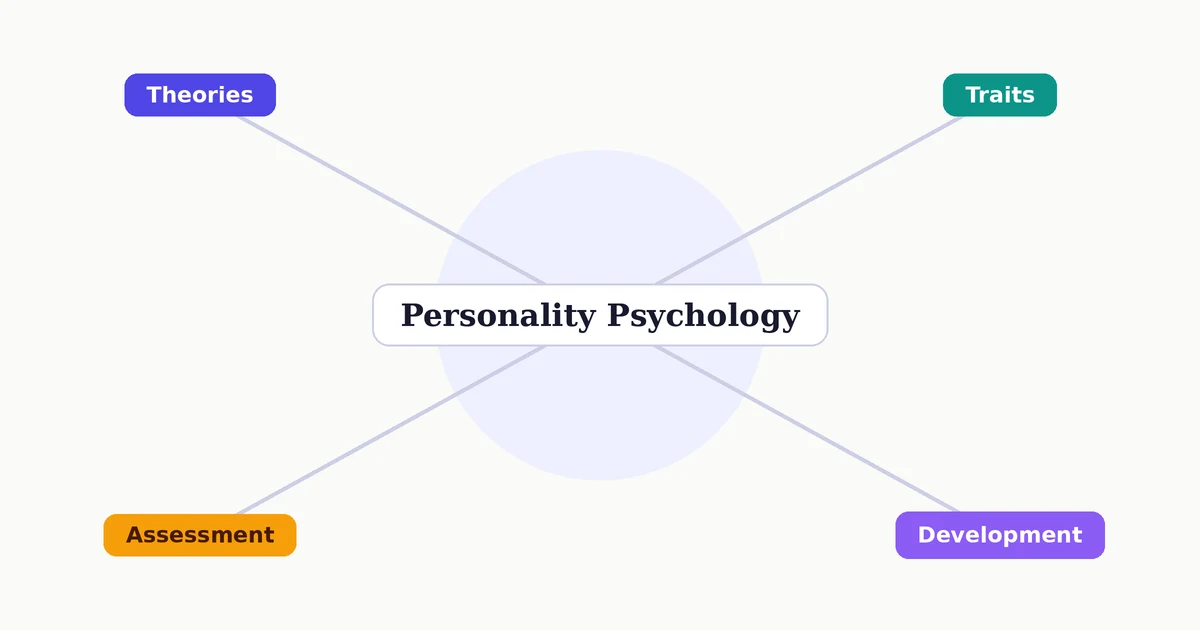
Diagram mapping personality psychology into four areas: theories, traits, assessment, and development

What Is Personality Psychology? The Complete Guide

Personality psychology is the branch of psychology that studies individual differences — the patterns in how people think, feel, and …

Read More →

Newer posts
← Previous Page1 Page2

Recent Posts

  • Illustration of a bookshelf holding personality psychology books in indigo, teal, amber, and violet, with the words Best Personality Psychology BooksBest Personality Psychology Books
  • Five colorful cards showing the Big Five personality traits: Openness, Conscientiousness, Extraversion, Agreeableness, and NeuroticismBig Five Personality Test
  • Original concept diagram mapping five trait patterns — openness, conscientiousness, extraversion, agreeableness, emotional stability — to typical workplace strengthsPersonality and Career: How Traits Shape Your Work Life
  • Illustration of a winding path rising gently through adolescence, young adulthood, middle adulthood, and later life, showing that personality change is gradualCan Your Personality Change? What Research Says
  • Original diagram comparing personality traits as spectrum sliders with percentile scores against personality types as 16 category boxes, with one type highlightedPersonality Traits vs Personality Types: What’s the Difference?
  • Diagram with three cards summarizing the MBTI with 16 types, the Enneagram with 9 types, and DISC with 4 styles, under the heading 'Frameworks that sort people into categories'Personality Types Explained: MBTI, Enneagram & More
  • About
  • Contact
  • Privacy Policy
  • Terms of Service
  • Disclaimer
© 2026 Psychology Connections • Built with GeneratePress