
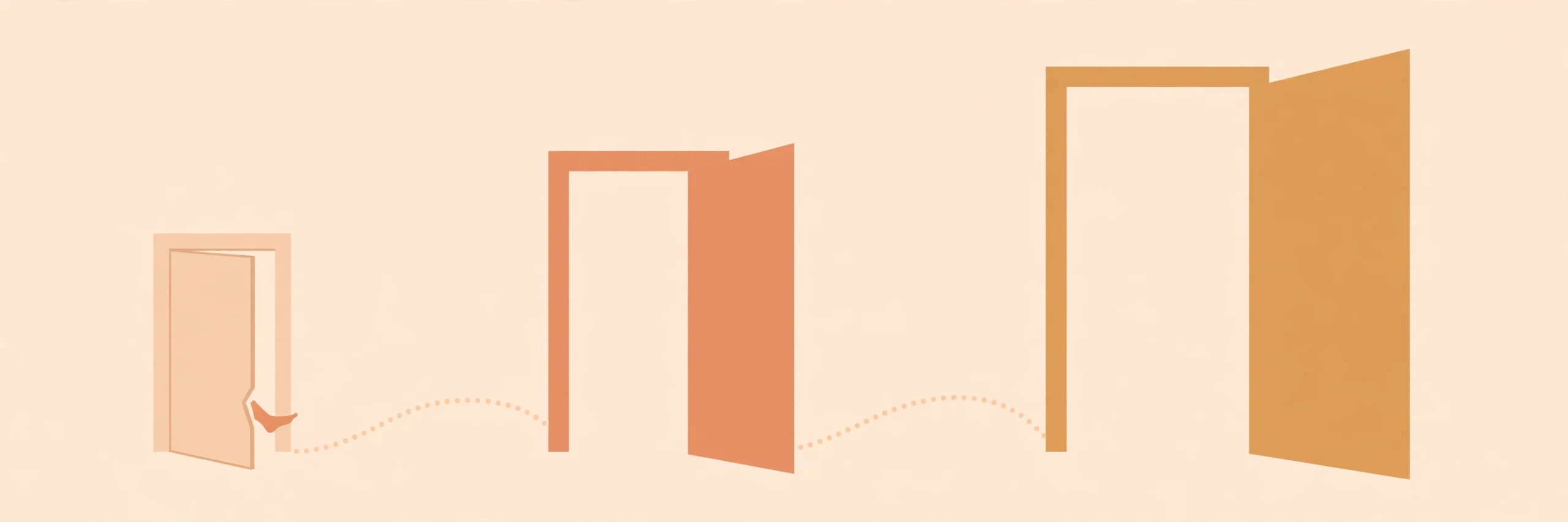
The foot-in-the-door effect is the finding that agreeing to a small request makes a person more likely to agree to a larger, related request later. The technique takes its name from the image of a salesperson getting a foot in the door before making the real pitch. It was demonstrated experimentally by Jonathan Freedman and Scott Fraser in 1966.
What it looks like
The pattern appears in sales, fundraising, and everyday persuasion. A charity first asks you to sign a petition, and days later asks for a donation. A colleague first asks for a quick opinion, and later asks you to join a committee. A website first asks you to create a free account, and later asks you to subscribe. In each case, the first request is small and easy to accept; the second is the one that actually matters.
Why it happens
The usual explanation is self-perception: after agreeing to the small request, people come to see themselves as the kind of person who supports this cause, helps this colleague, or uses this service. The larger request then feels consistent with that new self-image, and refusing it would feel inconsistent. The requests must also be related; a small favour in one area rarely makes a large, unrelated request feel consistent. Freedman and Fraser’s original study showed the effect clearly: householders who first agreed to a small request — such as signing a petition about safe driving — were later far more likely to agree to a large one, such as placing a big sign on their lawn, than householders who were only asked for the large request.
An everyday example
A neighbour asks to borrow a cup of sugar. You agree; it costs nothing. A week later, the same neighbour asks to borrow your ladder for the weekend. You are more likely to agree than if the ladder had been the first request, because you now see yourself as a helpful neighbour to this person, and saying no feels like breaking that pattern. The first small yes quietly changed the terms of the second decision.