
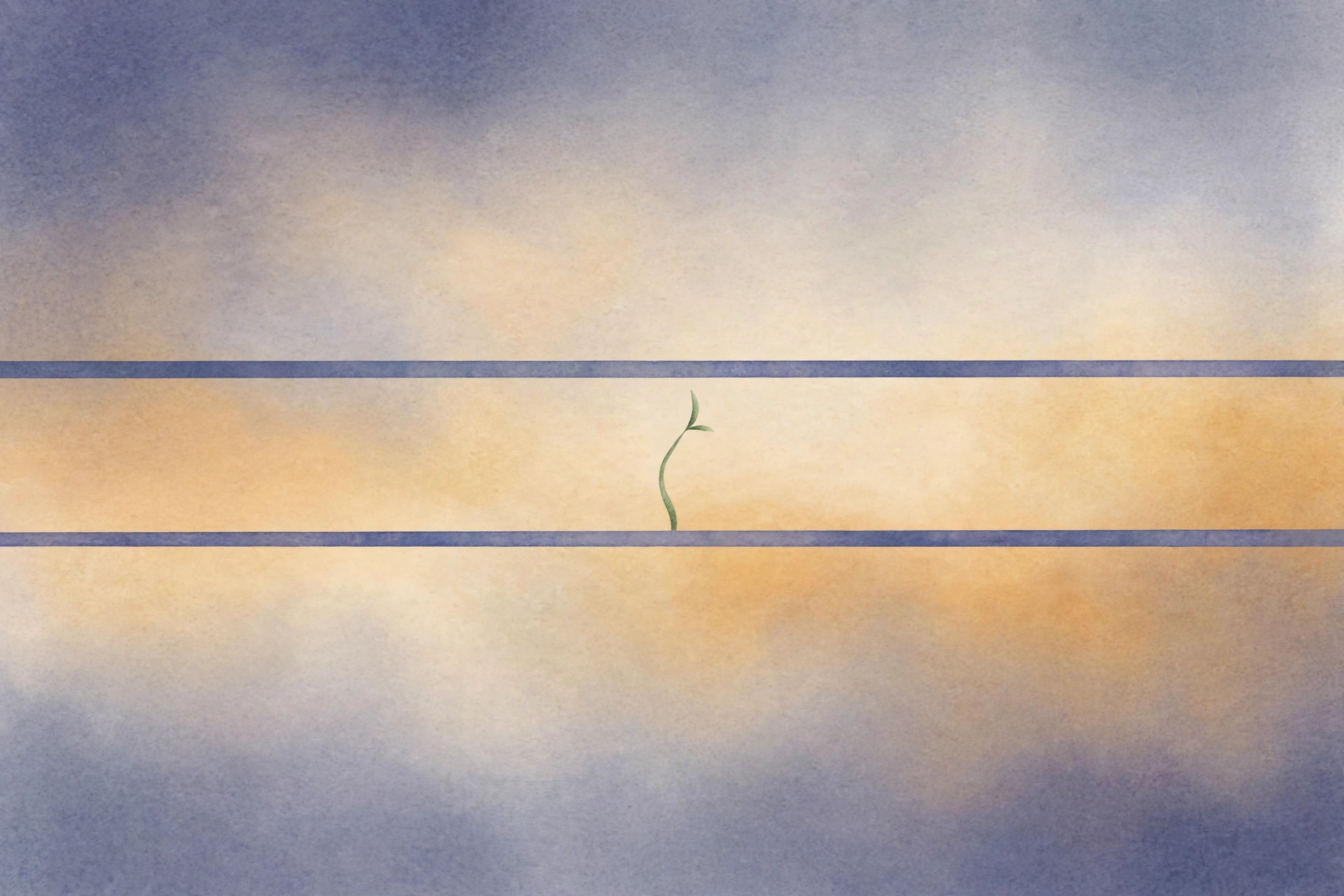
Most long-term relationships go through a flat patch. The early excitement fades, the days start to look alike, and a couple who once talked for hours can find themselves eating dinner in comfortable — or not so comfortable — silence. Nothing dramatic has happened. No fight, no betrayal, no obvious problem. The relationship simply feels boring. Research suggests this is not a sign that something has gone wrong with the people involved. It is, to a large extent, how the mind works: we get used to good things, and when a relationship stops adding anything new, the feeling of flatness follows.
This article explains what research has found about why long-term relationships feel boring, and what actually helps. It describes patterns found across many couples in many studies, not rules for any one person. It cannot diagnose a relationship, predict whether a relationship will last, or tell you whether your own boredom is a passing phase or a real problem. It can help you understand the forces behind the flatness — and what the evidence says about the one remedy researchers keep coming back to: doing new things together.
Why Boredom Happens in Long-Term Relationships
Boredom in a relationship is not the same as being bored on a rainy afternoon. It is a feeling that the relationship itself has stopped offering anything new — the same conversations, the same routines, the same evenings, week after week. It is one of the most common complaints couples bring to therapists, and one of the least talked about in public, because it feels like an accusation: if you are bored, the unspoken logic goes, you must not love your partner enough.
The research tells a different story. The flatness that settles into long-term relationships is largely the result of two ordinary processes that have nothing to do with how much a couple cares about each other. The first is habituation: the mind stops noticing things that stay the same. The second is a slowdown in what psychologists call self-expansion: the sense of growing, learning, and becoming more through the relationship. When both processes run their course, a relationship can be perfectly stable and genuinely flat at the same time. Understanding those two processes is the first step, because each points to a different part of the remedy.
Habituation: The Brain Gets Used to Good Things
Habituation is one of the simplest principles in psychology: when something is repeated without change, our response to it gets weaker. The first time you hear a new song, it catches your attention. By the fiftieth listen, it fades into the background. The same thing happens with a view from a window, a favourite meal, and — less comfortably — a partner. A partner who was once a source of constant surprise becomes familiar, and familiarity, while comforting, is not very exciting.
This is not a flaw in the relationship. It is how attention works. The brain is built to notice change and to ignore what stays the same, because change is where new information lives. A relationship that has settled into fixed routines gives the brain very little that is new to notice, so it stops noticing much at all. The partner is still there, still kind, still reliable — but the feeling of aliveness that came from discovering them has gone quiet.
Habituation also explains why the early months of a relationship feel so different from the later years. In the beginning, almost everything is new: the partner’s stories, their habits, their opinions, the places you go together. The brain is flooded with novelty, and novelty feels exciting. Over time, the supply of firsts runs out. The couple knows each other’s stories, has settled its routines, and visits the same places. The relationship has not got worse — it has got more predictable. And predictability, for a brain wired to notice change, reads as boredom.
Habituation does not mean the love is gone, or that the partner is boring as a person. It means the relationship has stopped generating new experiences. That distinction points to the remedy: if the problem is a lack of novelty, the fix is not a new partner or a dramatic gesture, but new experiences inside the relationship that already exists.
The Self-Expansion Model: Growing Together, or Not
The second process comes from a framework called the self-expansion model, developed by psychologists Arthur and Elaine Aron. The core idea is simple: people are motivated to grow — to take in new experiences, new knowledge, new perspectives, and new identities — and a close relationship is one of the main ways they do it. In the early stages of a relationship, a partner is a whole new world to explore, so the self expands rapidly. That expansion feels exciting, and it is a large part of what the early intensity of a relationship is made of.
As Aron and Aron (1996) described in their review of the model, the expansion does not stop because the love stops. It slows because the partner becomes familiar. Once you know someone well, there is less of them left to discover, and the relationship adds less that is new to who you are. The model predicts exactly what many couples report: the fastest growth, and the most excitement, comes early, and the feeling of flatness arrives when the growth slows down — even if the relationship itself is warm and stable.
The Arons also gave researchers a way to measure this sense of closeness and growth. In a 1992 study, Aron, Aron, and Smollan introduced the Inclusion of Other in the Self Scale, a simple set of overlapping circles that lets people show how much their partner has become part of how they see themselves. People who feel their partner is deeply included in their sense of self tend to report closer, more satisfying relationships. The scale has become one of the most widely used measures in relationship research, and it captures something the self-expansion model predicts: closeness is not just about spending time together, but about whether the relationship is still adding something to who you are.
This is why boredom and closeness can exist side by side. A couple can be deeply included in each other’s lives — shared friends, shared routines, shared plans — and still feel flat, because inclusion without new growth is a full life that has stopped expanding. The remedy, on this model, is not more of the same closeness. It is new experiences that let both partners grow again, together.
What Research Says Helps
The most consistent finding in this area is also the most practical: couples who do new and challenging things together feel less bored and more satisfied. The strongest evidence comes from a series of studies by Aron and colleagues (2000), who tested the idea in several ways at once. In survey studies, couples who reported doing more exciting shared activities also reported higher relationship satisfaction, and that link was explained by lower boredom — the activities seemed to work through reducing boredom. Then, in three laboratory experiments, couples were randomly assigned to spend seven minutes on either a novel and arousing task together or a more mundane one. The couples who did the novel, arousing task showed greater increases in experienced relationship quality afterwards than those who did the mundane task, and the effect was due to the novel task itself, not simply to doing something together. The results held up even after the researchers accounted for social desirability — the tendency to give pleasing answers.
A related study looked at the question from the other direction. Reissman, Aron, and Bergen (1993) examined whether shared activities cause satisfaction, or whether satisfied couples simply do more things together. Their findings supported the idea that shared activities — particularly ones that expand the self — contribute to satisfaction, rather than merely reflecting it. That matters, because it means the remedy is something a couple can actually choose to do, not just a side effect of already being happy.
So what counts as a new and challenging shared activity? The research points to things that are novel, a bit arousing, and genuinely shared — not just new to one partner, and not just a change of scenery. Examples from the studies and the wider literature include learning something together (a language, an instrument, a sport), travelling somewhere neither of you has been, taking on a physical challenge together, or tackling a project that stretches you both. The key ingredients are novelty and a mild sense of challenge: the activity should ask something of you both, so that you discover something new about each other and about yourselves in the process.
There are two cautions worth keeping in mind. First, the remedy is not a one-off event. A single exciting weekend will not permanently fix a flat relationship, any more than a single good conversation fixes a communication problem. The research describes an ongoing pattern: couples who regularly build new experiences into their shared life report less boredom. Second, the activity has to be genuinely shared. One partner taking up a new hobby alone may be good for them, but it does not expand the relationship. The growth has to happen together, so that the new experience becomes part of what the couple shares.
It is also worth saying what the research does not claim. Shared new experiences are not a cure for every problem. They will not fix contempt, broken trust, or a relationship in which one partner is doing all the emotional work. What they do, according to the evidence, is address one specific cause of flatness: the slowdown in growth and novelty. Where that is the main problem, they help. Where the problem is something else, they are at best a pleasant distraction.
What Boredom Doesn’t Mean
Boredom in a relationship is easy to misread, and the misreadings are where most of the damage is done. The first is the idea that boredom means the love is gone. The research on habituation and self-expansion says otherwise: a relationship can be low in novelty and still high in love, commitment, and care. Feeling flat is information about the pattern of the relationship, not a verdict on the feelings in it. The site’s guide to the psychology of relationships covers what holds couples together beyond the first rush of excitement — and steady affection is a large part of that story.
The second misreading is that boredom means you chose the wrong person. If boredom were mainly about choosing wrong, it would not be so common, and it would not follow the pattern the research finds: the fastest decline in excitement comes early, in the years after the honeymoon period, in relationships that are otherwise sound. The more useful question is not “did I choose wrong?” but “has this relationship stopped growing?” — because the second question has an answer you can act on.
The third misreading is that boredom is a personal failure — that an interesting person would never be bored. In fact, boredom is a normal response to a predictable environment, and it shows up in people who are perfectly capable of excitement elsewhere. A person can be bored in a relationship and engaged everywhere else in life, which is itself a clue: the problem is usually in the shared pattern, not in either partner alone. That is also why the remedy is shared. Emotional intimacy grows through the same kind of shared experience — one partner sharing something personal, the other responding with interest — and boredom often signals that this loop has gone quiet, not that it is broken.
None of this means boredom should be ignored. It is a real feeling, and it is telling you something real: the relationship has stopped offering enough that is new. The point is to read it accurately — as a signal about growth and novelty, not as a verdict on the relationship or the people in it.
When Boredom Is a Signal Worth Listening To
Most relationship boredom is the ordinary kind described above, and it responds to new shared experiences. But boredom can also be a signal that something deeper needs attention, and it is worth knowing the difference.
One sign is time. Boredom that comes and goes with the routines of life — worse in a busy month, better on holiday — is usually the ordinary kind. Boredom that is constant, heavy, and unchanged by new experiences may be pointing at something else: a loss of affection, a buildup of resentment, or a relationship that has drifted into parallel lives.
Another sign is what the boredom is attached to. If the flatness is about the shared life — the same evenings, the same conversations — the self-expansion remedy fits. If the flatness is about the partner themselves — a loss of respect, a loss of attraction that feels permanent, a sense of being unseen — then the issue is more likely to be about the quality of the connection, and the site’s guide to communication in relationships and the love languages guide both cover parts of that territory.
The strongest warning in the research comes from a long-term study by Tsapelas, Aron, and Orbuch (2009), which found that marital boredom predicted lower satisfaction nine years later. Boredom is not just an unpleasant feeling in the moment; left unaddressed, it is associated with worse outcomes down the line. That is a reason to take it seriously, not a reason to panic. It is also a reason to act on it early, while the relationship is still sound enough for new shared experiences to work.
Finally, boredom can sometimes sit alongside problems that new experiences cannot fix. If a relationship involves contempt, chronic criticism, betrayal, or harm, boredom is the least of the problems, and the right next step is honest conversation or professional help — not a new hobby together. Boredom is worth listening to precisely because it can be either an ordinary signal about growth or an early sign of something more serious, and telling the two apart matters more than any single remedy.
Key Takeaways
- Boredom in long-term relationships is common and normal — it is largely the result of habituation and a slowdown in self-expansion, not a sign that the love is gone or the wrong person was chosen.
- Habituation means the brain stops noticing what stays the same, so a relationship that has settled into fixed routines gives it little that is new — and predictability reads as boredom.
- The self-expansion model (Aron & Aron, 1996) says people grow through their relationships, and the excitement is fastest early on; when growth slows, the relationship can feel flat even while it is warm and stable.
- The best-supported remedy is shared novel and challenging activities: in experiments by Aron et al. (2000), couples who did a novel, arousing task together reported greater relationship quality afterwards, and the effect worked through reduced boredom.
- The remedy has to be ongoing and genuinely shared — a single exciting weekend is not enough, and one partner’s solo hobby does not expand the relationship.
- Boredom is worth taking seriously: Tsapelas, Aron, and Orbuch (2009) found that marital boredom predicted lower satisfaction nine years later, so it is a signal to act on early rather than ignore.
References
- Aron, A., & Aron, E. N. (1996). Love and expansion of the self: The state of the model. Personal Relationships, 3(1), 45–58. https://doi.org/10.1111/j.1475-6811.1996.tb00103.x
- Aron, A., Aron, E. N., & Smollan, D. (1992). Inclusion of Other in the Self Scale and the structure of interpersonal closeness. Journal of Personality and Social Psychology, 63(4), 596–612. https://doi.org/10.1037/0022-3514.63.4.596
- Aron, A., Norman, C. C., Aron, E. N., McKenna, C., & Heyman, R. E. (2000). Couples’ shared participation in novel and arousing activities and experienced relationship quality. Journal of Personality and Social Psychology, 78(2), 273–284. https://doi.org/10.1037/0022-3514.78.2.273
- Reissman, C., Aron, A., & Bergen, M. (1993). Shared activities and marital satisfaction: Causal direction and self-expansion versus boredom. Journal of Social and Personal Relationships, 10(2), 243–254. https://doi.org/10.1177/026540759301000205
- Tsapelas, I., Aron, A., & Orbuch, T. L. (2009). Marital boredom now predicts less satisfaction 9 years later. Psychological Science, 20(5), 543–545. https://doi.org/10.1111/j.1467-9280.2009.02332.x
Keep Exploring
- The Psychology of Relationships: What Makes Them Work
- Emotional Intimacy: How Closeness Develops
- Love Languages: Are They Real? What Research Says
- Communication in Relationships: What Research Says Works
Why do long-term relationships get boring?
Mainly because of two ordinary processes: habituation — the brain stops noticing what stays the same — and a slowdown in self-expansion, the sense of growing through the relationship. The relationship has not necessarily got worse; it has got more predictable, and predictability reads as boredom.
Does boredom mean the love is gone?
No. Research on habituation and self-expansion shows a relationship can be low in novelty and still high in love, commitment, and care. Boredom is information about the pattern of the relationship — that it has stopped offering enough that is new — not a verdict on the feelings in it.
What actually helps relationship boredom?
Shared novel and challenging activities — things that are new, a bit demanding, and genuinely done together, like learning something new, travelling somewhere unfamiliar, or taking on a physical challenge. In experiments by Aron and colleagues (2000), couples who did a novel, arousing task together reported greater relationship quality afterwards, and the effect worked through reduced boredom.
Can boredom be a warning sign?
Yes. Most boredom is ordinary and responds to new shared experiences, but boredom that is constant and unchanged by new experiences may point to something deeper, such as lost affection or built-up resentment. A long-term study (Tsapelas, Aron, & Orbuch, 2009) also found that marital boredom predicted lower satisfaction nine years later, so it is worth acting on early.
Is it normal to feel bored even in a good relationship?
Yes. Boredom is a normal response to a predictable environment, and it is one of the most common complaints couples report. It shows up even in warm, stable, committed relationships — which is why it is better read as a signal about growth and novelty than as proof that anything is wrong with the people involved.