
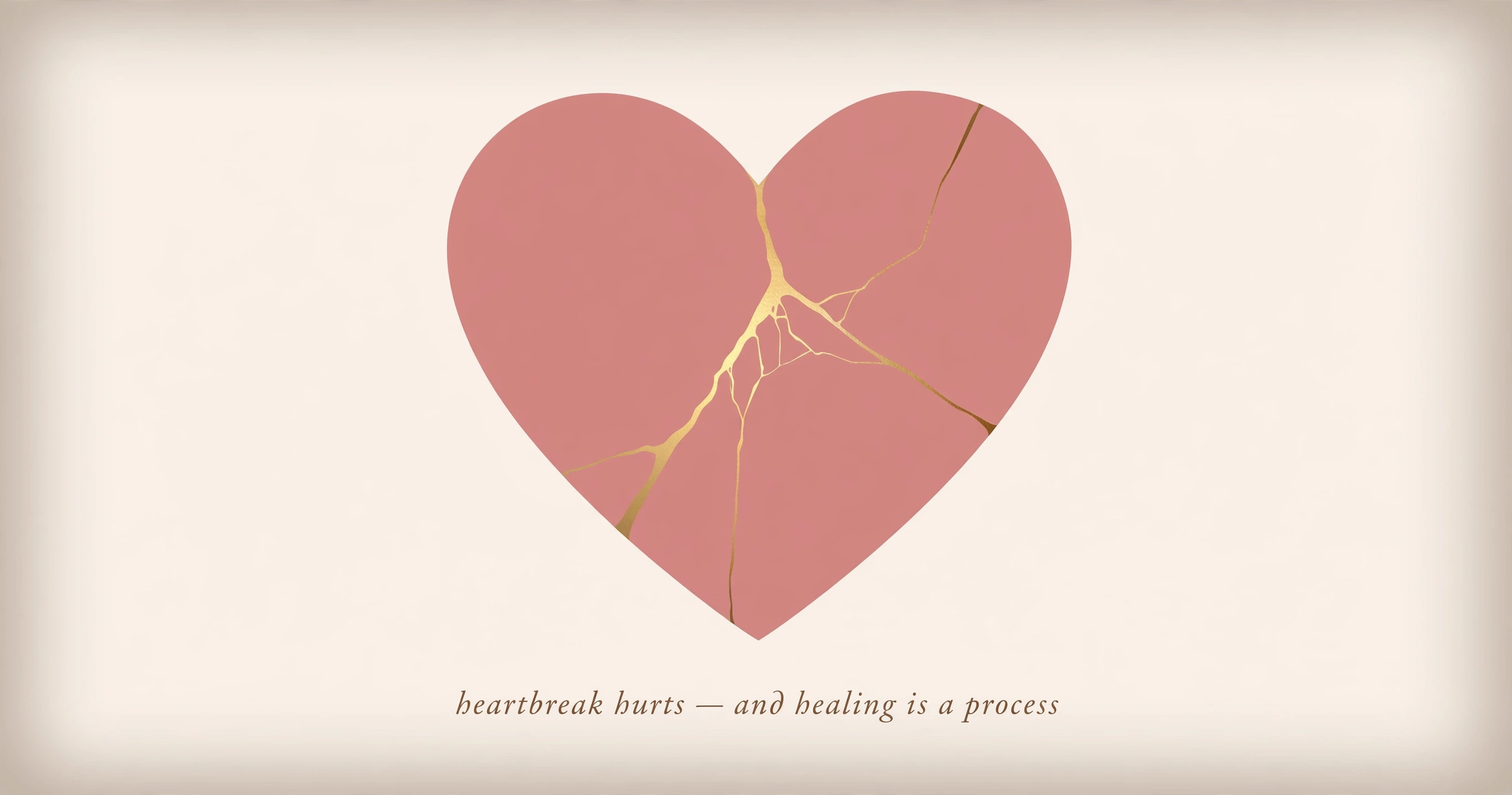
Breakups hurt so much because a romantic partner is never just one thing in your life. They are an attachment figure, a daily routine, part of how you see yourself, and a source of some of your brain’s strongest rewards — and losing them disrupts all of those at once. Brain imaging research has shown that heartbreak engages some of the same circuitry as physical pain and craving, which is why “heartbroken” feels literal rather than poetic.
This article looks at what psychology research actually finds about why breakups hurt, why the pain varies so much from person to person, and what recovery tends to look like. It offers no timelines and no promises — grief after a breakup is normal, and healing doesn’t follow a schedule.
Table of Contents
Heartbreak in the Brain
One reason heartbreak feels physical is that, at the neural level, it partly is. In a 2011 brain-imaging study, researchers asked people who had recently gone through an unwanted breakup to look at a photograph of their ex-partner while thinking about the rejection. The scans showed activity not only in regions tied to emotional distress, but in the secondary somatosensory cortex and dorsal posterior insula — areas that support the sensory, felt-in-the-body component of physical pain (Kross, Berman, Mischel, Smith, & Wager, 2011). The researchers’ conclusion: intense social rejection and physical pain share some of the same neural representation. “Rejection hurts” is, measurably, more than a metaphor.
A second line of research helps explain the craving-like quality of heartbreak — the pull toward someone who has hurt you, the difficulty of “just moving on.” In a neuroimaging study of fifteen people who had recently been rejected but were still intensely in love, viewing a photo of the former partner activated the ventral tegmental area and nucleus accumbens — core regions of the brain’s reward and motivation circuitry, the same circuitry involved in addiction and craving — along with prefrontal regions tied to obsessive thinking and emotion regulation (Fisher, Brown, Aron, Strong, & Mashek, 2010). The pattern resembles craving more than simple sadness: the brain’s reward system keeps reaching for something it can no longer have. When that preoccupation centres on one person and feeds on uncertainty, psychologists call it limerence.
Why Losing a Partner Unravels So Much
The brain findings make more sense alongside a basic fact about human motivation: we are built to need close bonds. Psychologists Roy Baumeister and Mark Leary argued that the need to belong — to form and maintain lasting, positive relationships — is a fundamental human motivation, shaping behavior as powerfully as our most basic drives (Baumeister & Leary, 1995). A romantic partner typically sits at the center of that need, which is why losing one registers as more than disappointment.
A partner also tends to become an attachment figure — someone your mind treats as a source of safety and comfort. (Our attachment articles explore these patterns in depth; see Anxious Attachment for how they shape reactions to separation.) When that figure is gone, the loss isn’t only emotional. Daily routines lose their shape, shared plans evaporate, and the version of yourself that existed inside the relationship — “us” — has to be rebuilt as “me.” That reorganization is a large part of what the pain is about.
Why It Hits People Differently
Not everyone experiences a breakup the same way, and research points to real reasons for the variation. In a study of people’s physical, emotional, and behavioral reactions to breaking up, those with a more anxious attachment style reported greater preoccupation with their ex-partner and greater distress overall, while more securely attached people were more likely to turn to social support to cope (Davis, Shaver, & Vernon, 2003). This doesn’t mean attachment style is destiny — it means some nervous systems sound the alarm louder when a bond breaks, which is worth knowing without judging yourself for it.
One finding surprises many people: research has not consistently shown that ending the relationship protects you from the pain. Studies comparing initiators and non-initiators have produced mixed results, with several finding no reliable difference in distress — the person who leaves can grieve too, alongside guilt and the need to justify the decision. If you ended it and still hurt, that is a documented pattern, not a contradiction.
The reason for the split matters too: when infidelity is the cause, the grief carries an extra layer of betrayal.
What most consistently mattered for recovery in one longitudinal study was acceptance — acceptance of the breakup mediated the link between attachment security and recovery from sadness. Greater attachment preoccupation, meanwhile, was associated with a lower probability of sadness recovery, while attachment security predicted recovery from anger (Sbarra, 2006). Put differently: healing seems to start not when enough time passes, but when the mind stops negotiating with the ending.
What Recovery Actually Looks Like
Because the research points to acceptance rather than the calendar, this article will not tell you how long getting over a breakup takes. There is no verified timeline, and anyone offering one in weeks or months is guessing. What the evidence suggests instead:
Recovery is reorganization, not erasure. You don’t delete the attachment; your mind gradually stops treating the ex-partner as the person to turn to, and redirects those needs elsewhere. That restructuring is the work underneath the feelings.
It is rarely linear. Sadness and anger tend to resolve on different schedules, and setbacks — a song, a place, a date on the calendar — are part of the pattern, not evidence of failure.
Acceptance can be practiced, not just waited for. The research can’t prescribe a method, but the finding points somewhere useful: whatever helps you genuinely register that the relationship has ended — honest reflection, talking it through with people you trust, writing — is aimed at the mechanism that matters. Our article on Can Attachment Style Change? explores how relationship patterns, including post-breakup ones, can shift with sustained effort.
Other bonds matter. The need to belong doesn’t vanish with one relationship’s end. The same study that found securely attached people coped better also found they did so by turning toward other relationships (Davis, Shaver, & Vernon, 2003). Friendships, family, community — these are not distractions from healing; they are part of its infrastructure. Recovery is slower when negativity bias keeps one painful moment standing for the whole relationship.
When to Seek Professional Support
Grief after a breakup is normal, but it isn’t always manageable alone — and there is no prize for white-knuckling it. Consider talking to a mental health professional if your distress feels severe or unrelenting, if it persists at high intensity for many weeks without easing, or if it is seriously impairing daily life: sleep, appetite, work, or the ability to function. Reaching out is not a sign that you are coping “wrong.” It is what support exists for.
Key Takeaways
- Breakups engage real pain circuitry: intense rejection activates some of the same brain regions as physical pain (Kross et al., 2011).
- Heartbreak also resembles craving — rejection activates reward and motivation systems, which helps explain why letting go feels so difficult (Fisher et al., 2010).
- The pain runs deeper than sadness because a partner sits at the center of the fundamental human need to belong (Baumeister & Leary, 1995).
- Reactions vary: attachment anxiety predicts greater distress and preoccupation, while acceptance of the ending predicts when recovery begins (Davis, Shaver, & Vernon, 2003; Sbarra, 2006).
- Being the one who ended it does not reliably protect against pain.
- There is no verified timeline for recovery; healing is reorganization, and it is rarely linear.
- If distress is severe, persistent, or impairing daily life, professional support is a reasonable and healthy step.
References
- Baumeister, R. F., & Leary, M. R. (1995). The need to belong: Desire for interpersonal attachments as a fundamental human motivation. Psychological Bulletin, 117(3), 497–529. https://doi.org/10.1037/0033-2909.117.3.497
- Kross, E., Berman, M. G., Mischel, W., Smith, E. E., & Wager, T. D. (2011). Social rejection shares somatosensory representations with physical pain. Proceedings of the National Academy of Sciences, 108(15), 6270–6275. https://doi.org/10.1073/pnas.1102693108
- Fisher, H. E., Brown, L. L., Aron, A., Strong, G., & Mashek, D. (2010). Reward, addiction, and emotion regulation systems associated with rejection in love. Journal of Neurophysiology, 104, 51–60. https://doi.org/10.1152/jn.00784.2009
- Davis, D., Shaver, P. R., & Vernon, M. L. (2003). Physical, emotional, and behavioral reactions to breaking up: The roles of gender, age, emotional involvement, and attachment style. Personality and Social Psychology Bulletin, 29(7), 871–884. https://doi.org/10.1177/0146167203029007006
- Sbarra, D. A. (2006). Predicting the onset of emotional recovery following nonmarital relationship dissolution: Survival analyses of sadness and anger. Personality and Social Psychology Bulletin. https://doi.org/10.1177/0146167205280913
Keep Exploring
- The Psychology of Relationships — the pillar overview: how relationship science understands bonds, loss, and repair.
- Anxious Attachment — why some people experience separation and breakup distress more intensely.
- Can Attachment Style Change? — how relationship patterns, including post-breakup ones, can shift over time.
Why do breakups hurt so much physically?
Brain imaging has shown that intense social rejection — including thinking about an ex-partner after an unwanted breakup — activates regions that support the sensory component of physical pain, including the secondary somatosensory cortex (Kross et al., 2011). Chest tightness, nausea, and exhaustion after a breakup are your nervous system responding to a real loss signal.
How long does it take to get over a breakup?
There is no verified timeline, and you should be skeptical of anyone who gives you one. Research suggests recovery depends less on the calendar and more on acceptance — genuinely registering that the relationship has ended predicted when emotional recovery began in a longitudinal study (Sbarra, 2006). It varies widely between people and between relationships.
Why can’t I stop thinking about my ex?
Two mechanisms converge. The brain’s reward circuitry can keep responding to a former partner the way it responds to something craved, which makes thoughts intrusive rather than voluntary (Fisher et al., 2010). Separately, people with more anxious attachment patterns tend toward greater preoccupation after breakups (Davis, Shaver, & Vernon, 2003). Neither means something is wrong with you — both are documented patterns.
Does it hurt less if I was the one who ended the relationship?
Not reliably. Research comparing initiators and non-initiators has produced mixed results, with several studies finding no consistent difference in distress. Initiators often contend with guilt and the need to justify the decision alongside grief. Hurting after ending a relationship is normal.
When should I consider talking to a professional?
If your distress feels severe or unrelenting, if it stays at high intensity for many weeks without easing, or if it is seriously impairing sleep, appetite, work, or daily functioning. You don’t need to meet a crisis threshold to deserve support — a therapist can help with ordinary heartbreak too.