Sternberg’s Triangular Theory of Love: Intimacy, Passion, Commitment
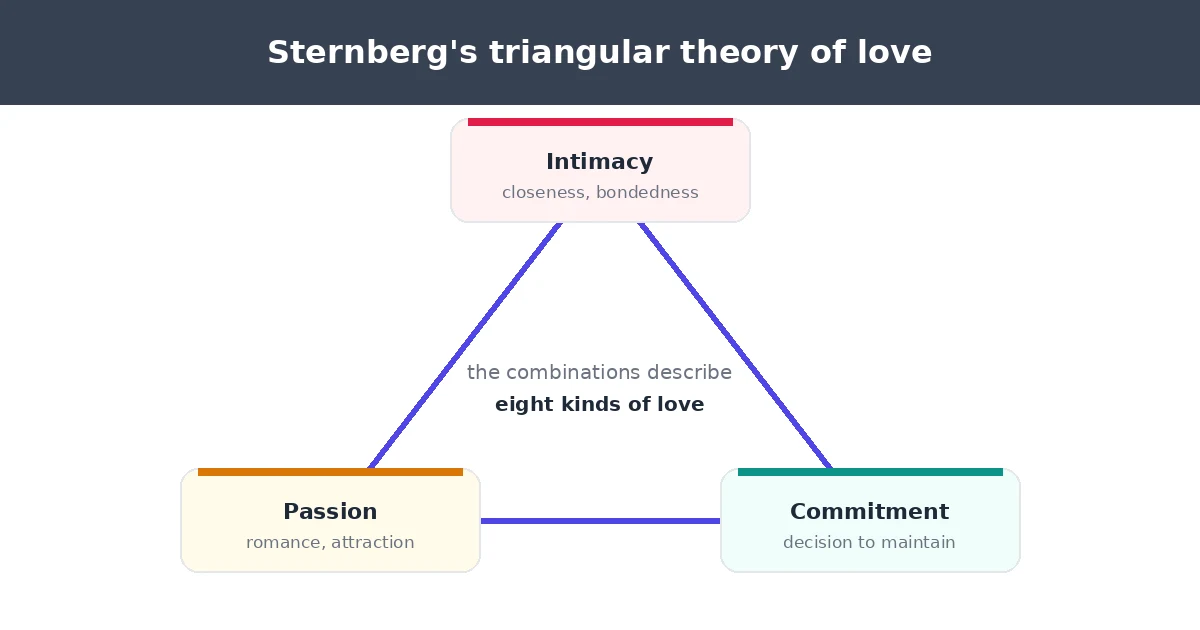
Robert Sternberg’s triangular theory of love (1986) proposes that love has three components: intimacy (closeness and connectedness), passion (romance, attraction, …

 Waqar
Robert Sternberg’s triangular theory of love (1986) proposes that love has three components: intimacy (closeness and connectedness), passion (romance, attraction, …
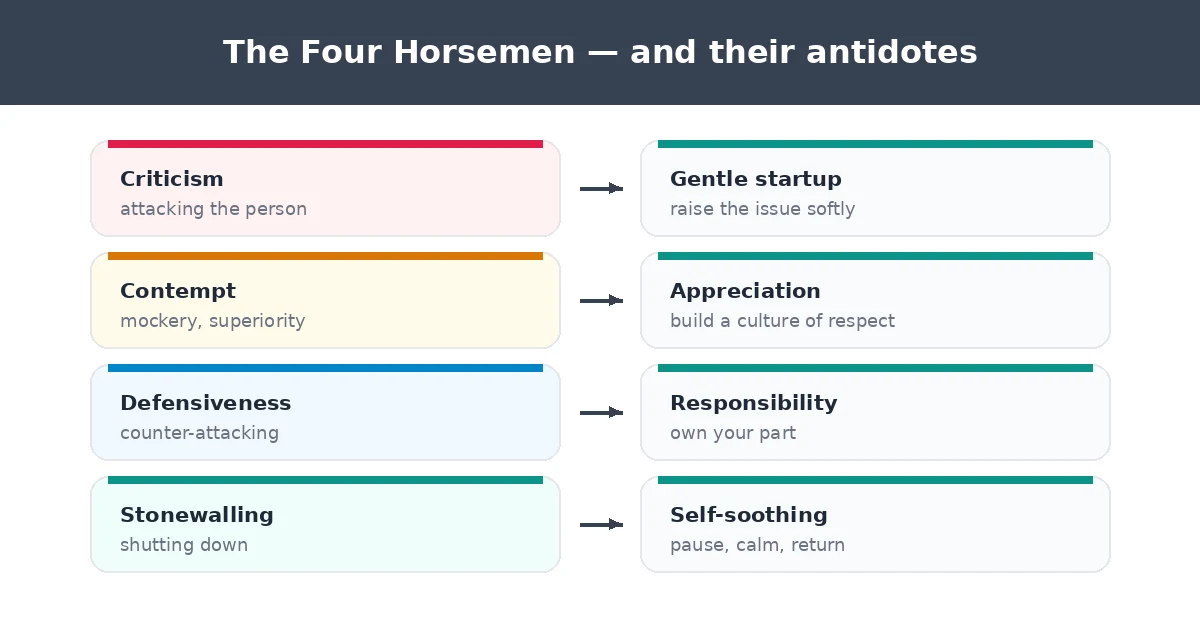
Disagreements don’t predict whether a relationship lasts — research consistently finds it’s not how often couples fight, but how. Couples …
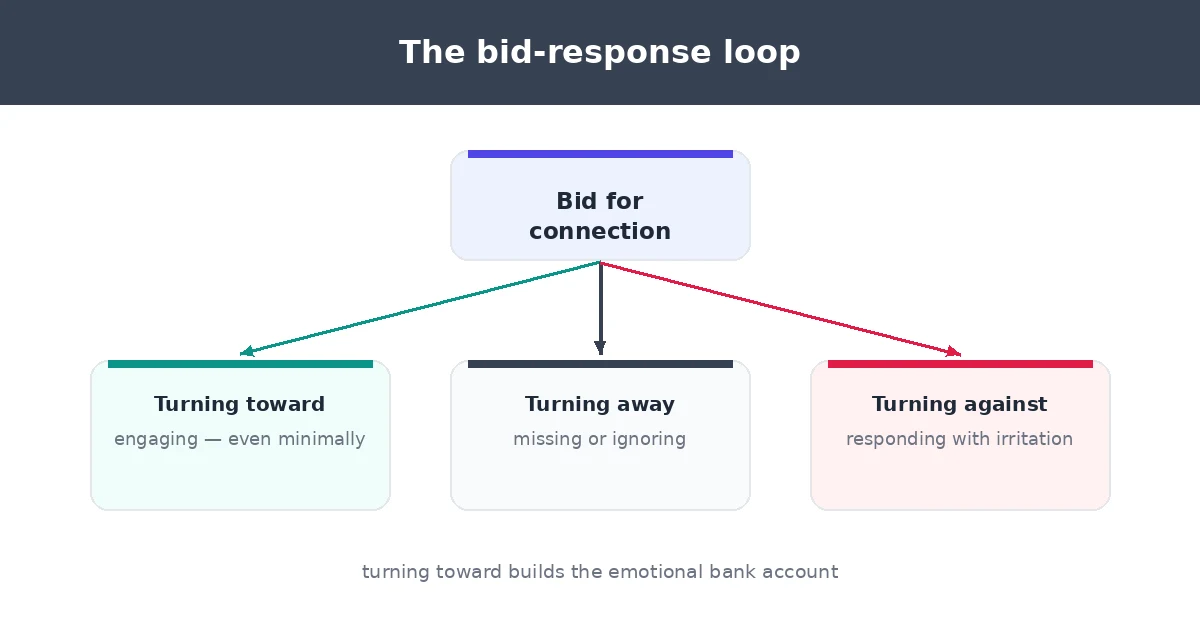
Research distinguishes couples less by whether they disagree than by how they talk: the balance of positive to negative moments …
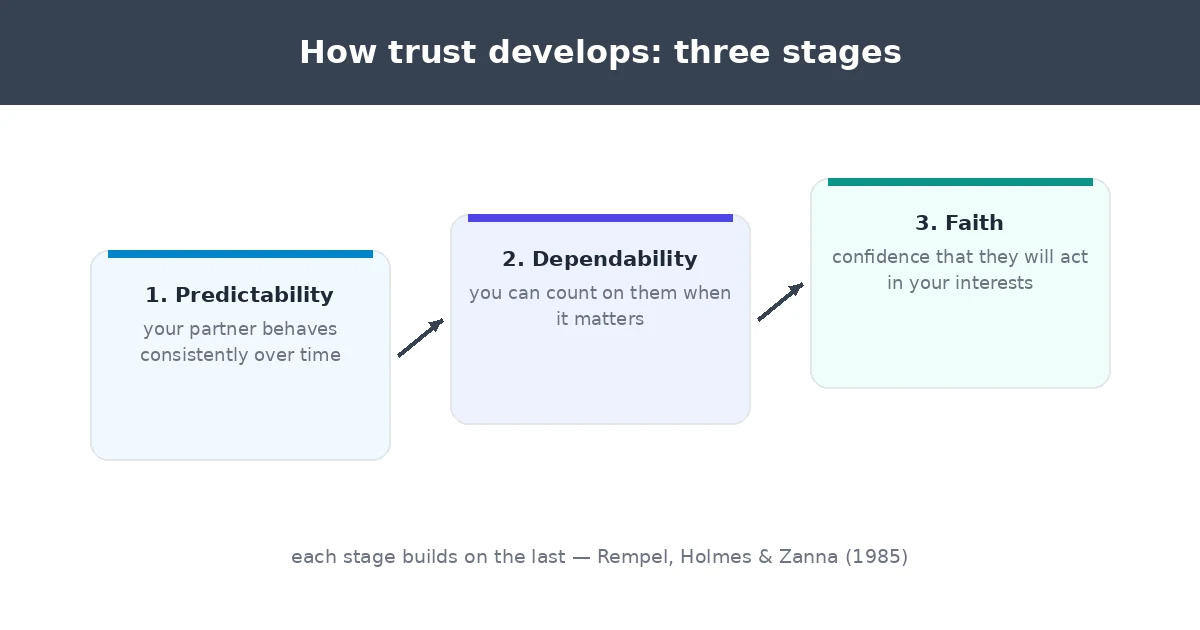
Trust is the expectation that your partner will act in your best interests — especially when it counts. Psychologists Rempel, …
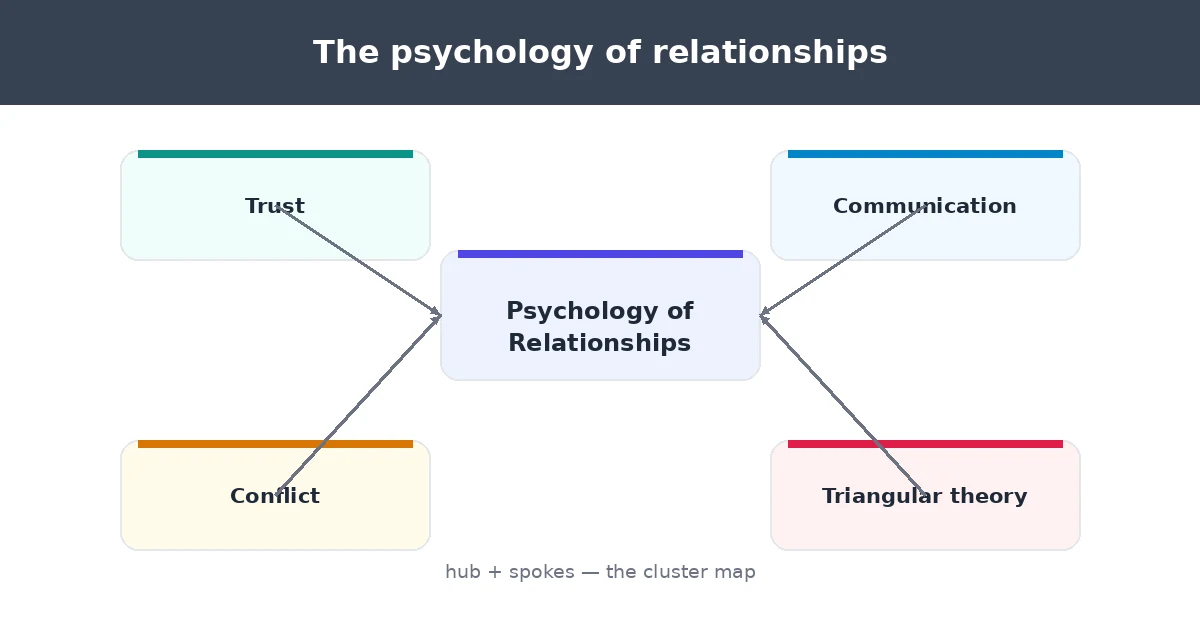
Relationship psychology is the scientific study of how close relationships form, stay satisfying, and sometimes end. Across decades of research, …

Yes — with honest qualifications. Longitudinal research finds that attachment patterns show meaningful stability and real change: they are modestly …
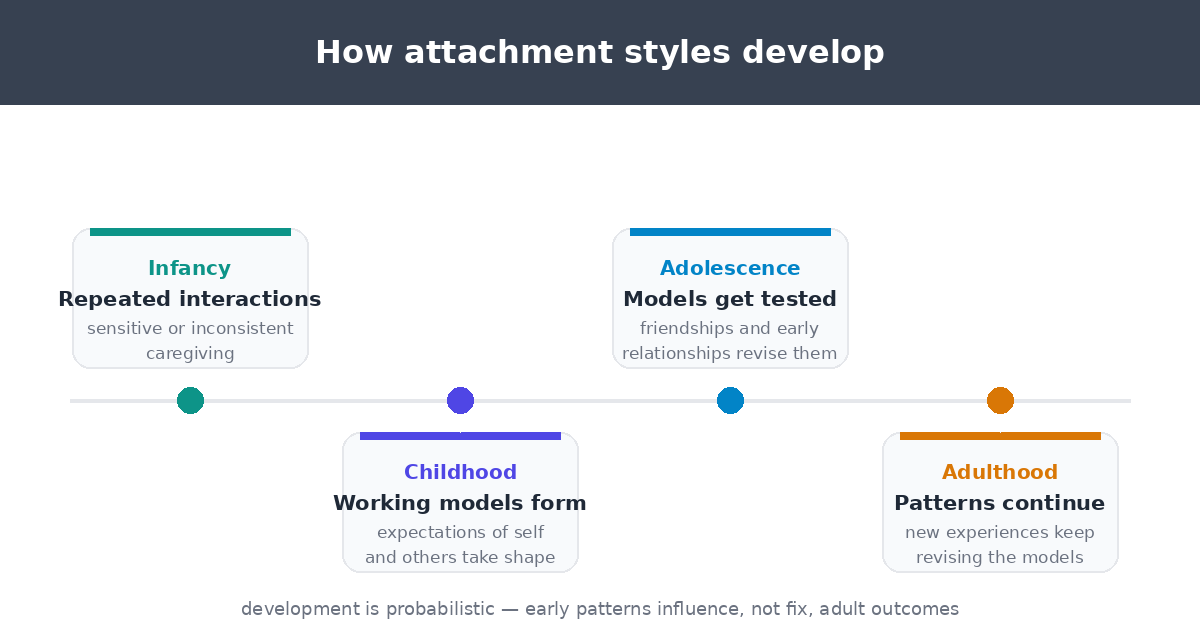
Where do attachment styles come from? The short answer from decades of research: mainly from repeated early interactions with caregivers, …
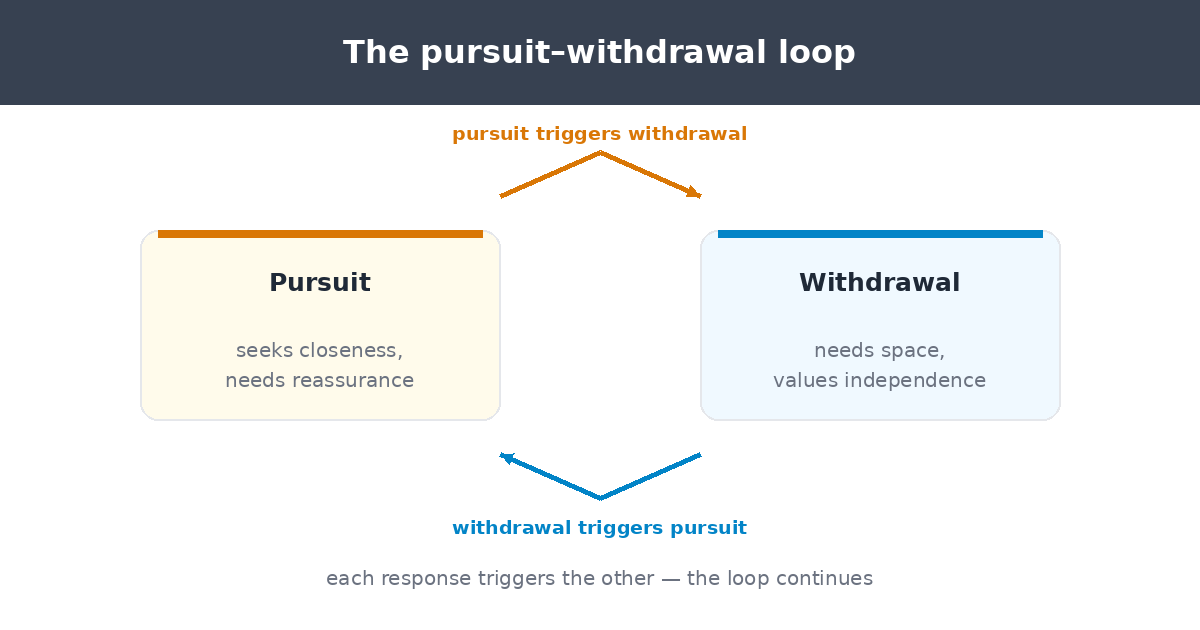
Attachment pairings are the relationship dynamics that emerge when two people’s attachment patterns meet. Your own pattern is only half …
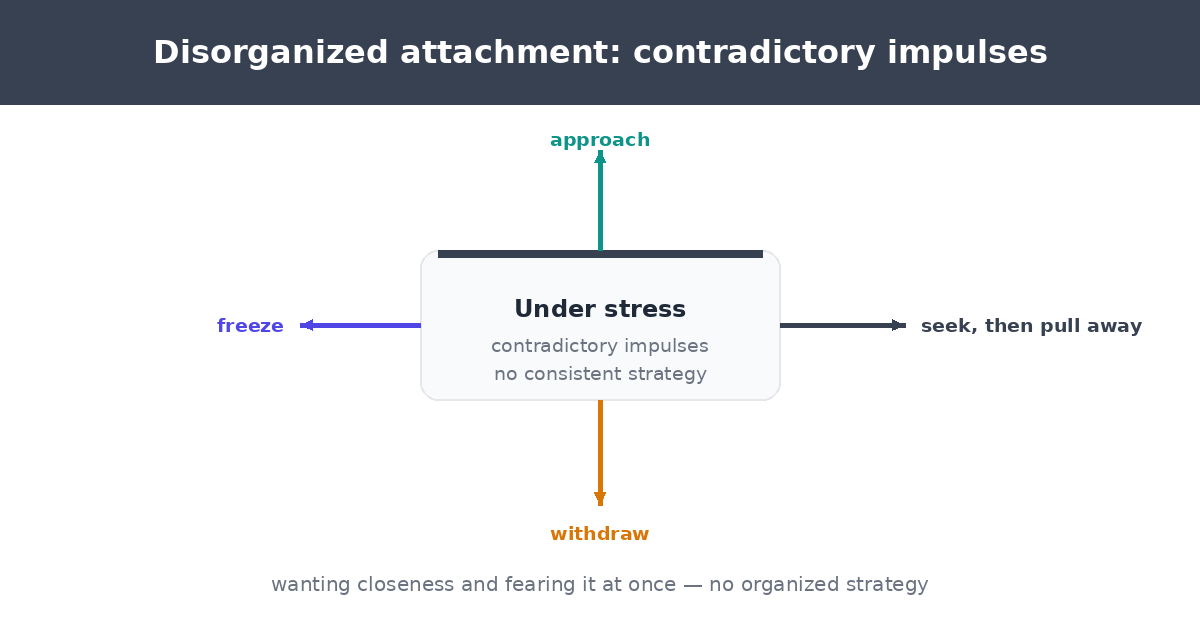
Disorganized attachment is the pattern without a consistent strategy. Where secure, anxious, and avoidant patterns are organized ways of handling …
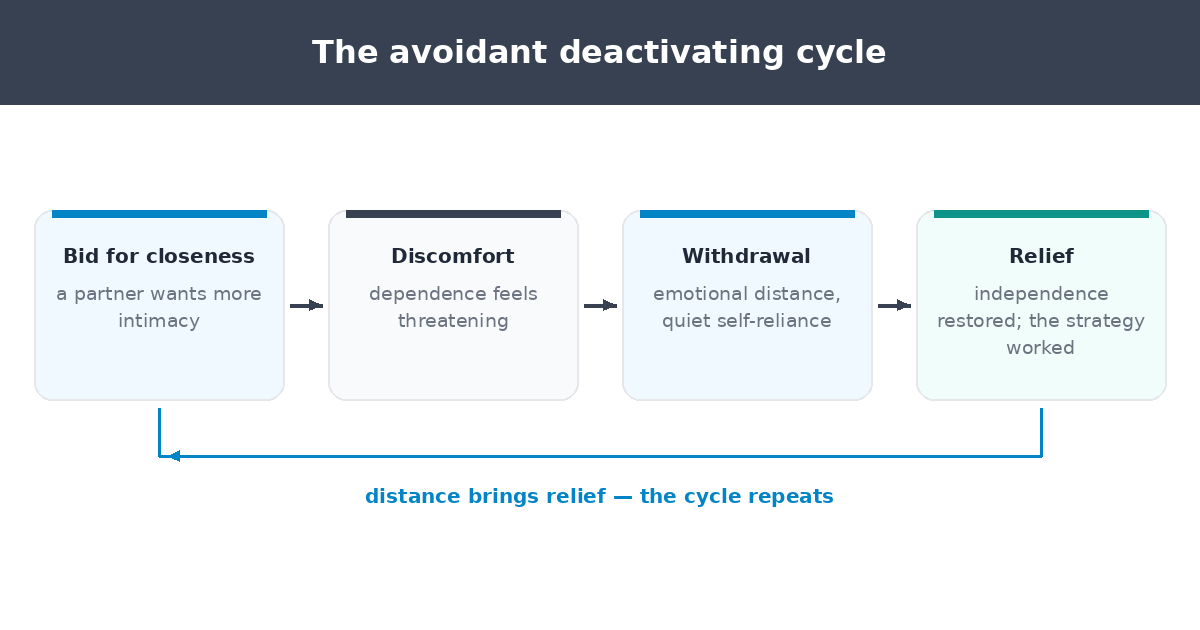
Avoidant attachment is a pattern of relating to close others marked by discomfort with closeness and a strong pull toward …