Skip to content
Psychology Connections
  • Psychology
    • Personality Psychology
    • Relationships
    • Cognitive Psychology
    • Behavioral Psychology
    • Emotions
    • Social Psychology
    • Attachment Psychology
  • Quizzes & Tests
    • Personality Quizzes
    • Emotional Intelligence Tests
    • Psychology Tests
    • Relationship Quizzes
  • Books
    • Best Psychology Books
    • Book Reviews
    • Book Summaries
  • Dictionary
    • Concepts
    • Terms
    • Theories & Models
  • About
  • Contact

Psychology

Explore Psychology

Six core areas, each one a rabbit hole of ideas, quizzes, and books.

Personality

Traits, types, and the Big Five — what makes you, you.

Explore →

Relationships

Attachment, love, and the psychology of connection.

Explore →

Cognitive Psychology

Biases, memory, and how your mind really decides.

Explore →

Behavioral Psychology

Habits, motivation, and why we do what we do.

Explore →

Emotions

Emotional intelligence and mastering your inner world.

Explore →

Social Psychology

Groups, influence, and the social mind.

Explore →

Latest articles in Psychology:

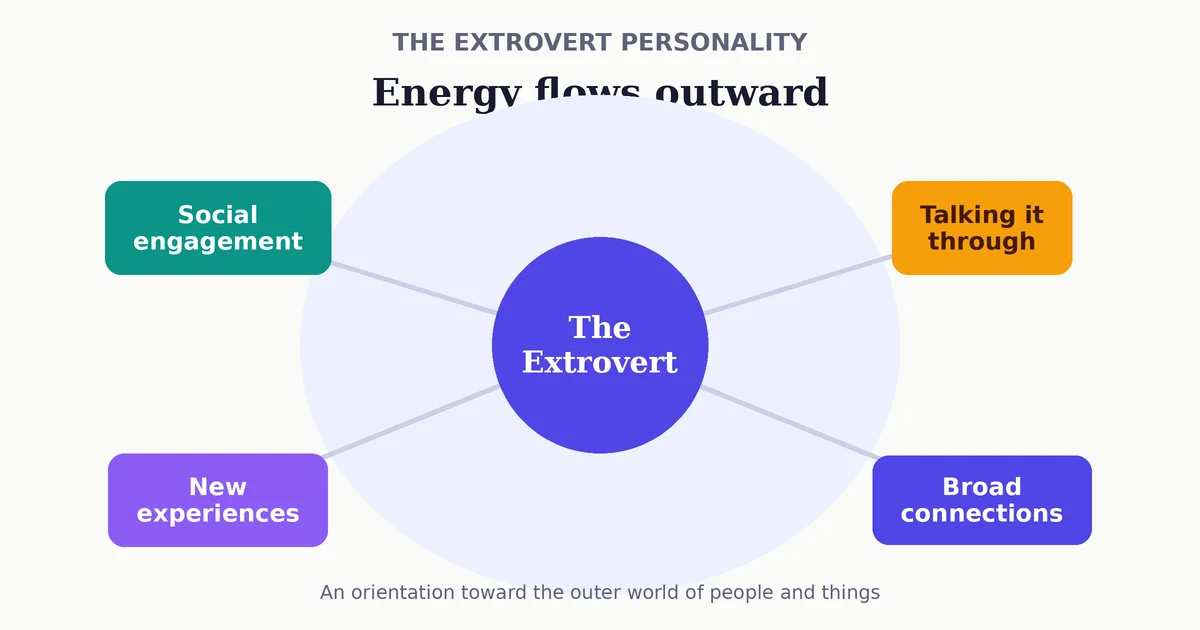
Diagram showing the extrovert personality as outward-flowing energy: a central 'The Extrovert' node connects to social engagement, talking it through, new experiences, and broad connections

Extrovert Personality: Traits, Signs & Strengths

An extrovert is someone whose energy and attention naturally point outward — toward people, activities, conversation, and the buzz of …

Read More →

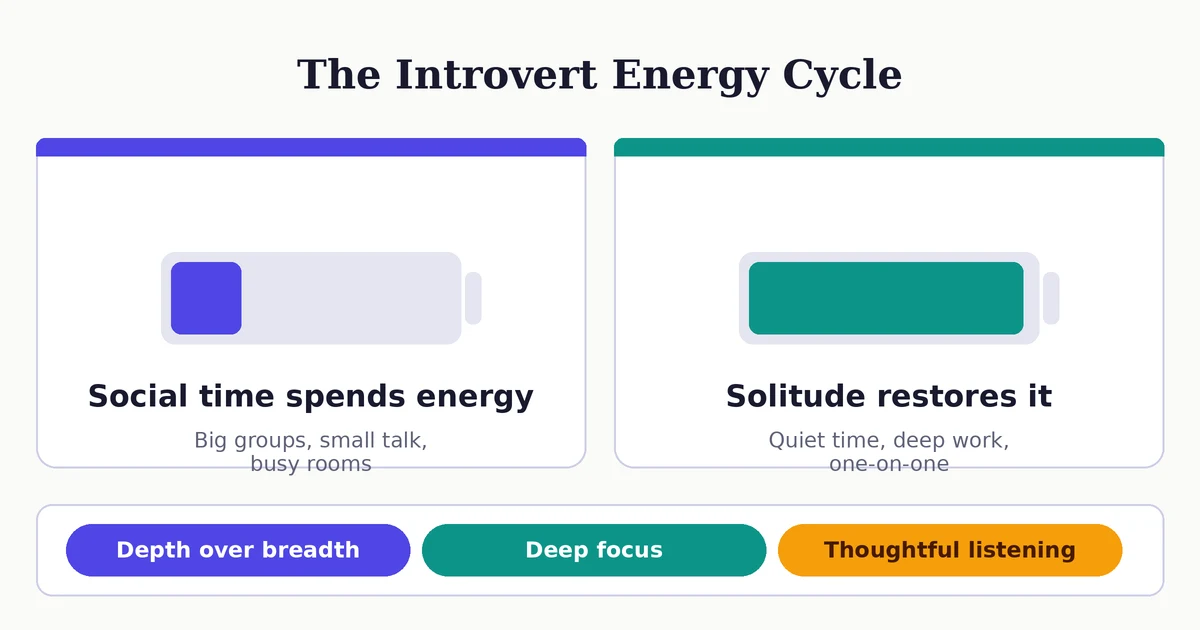
Diagram of the introvert energy cycle: social time such as big groups and busy rooms drains the energy battery, while solitude such as quiet time and deep work restores it — highlighting depth over breadth, deep focus, and thoughtful listening

Introvert Personality: Traits, Signs & Strengths

An introvert personality describes someone who is oriented toward their inner world — their thoughts, feelings, and ideas — rather …
Read More →

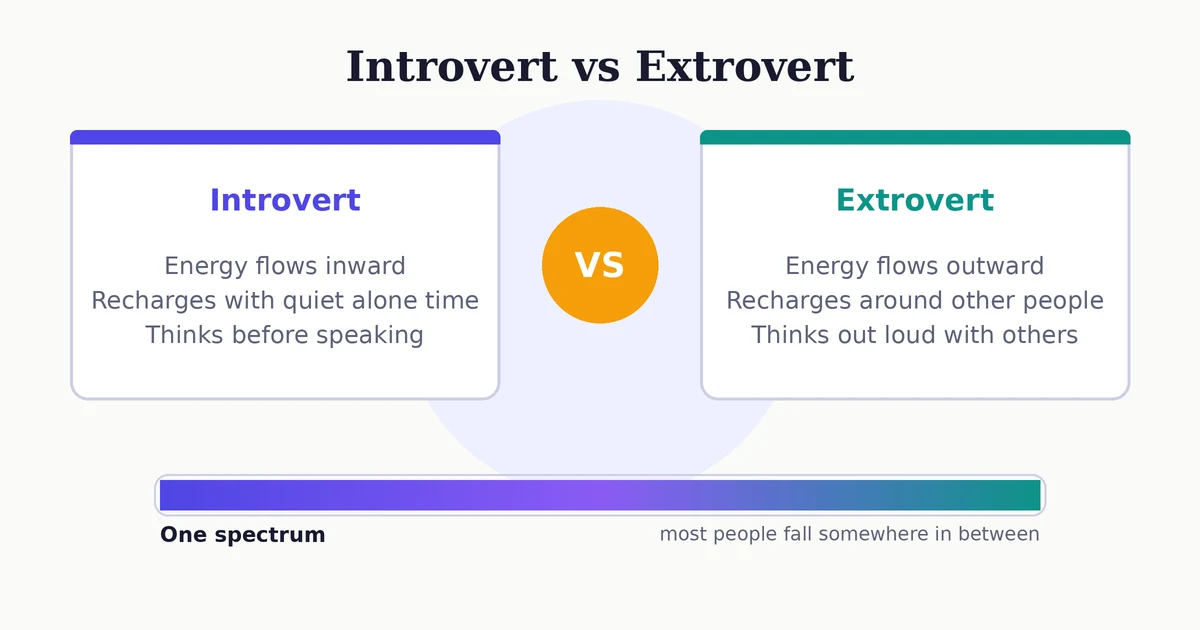
Comparison diagram showing an introvert whose energy flows inward and recharges with quiet alone time, versus an extrovert whose energy flows outward and recharges around other people, on one spectrum

Introvert vs Extrovert: Key Differences Explained

The real difference between introverts and extroverts isn’t shyness versus confidence — it’s orientation. An introvert’s energy flows inward, toward …
Read More →

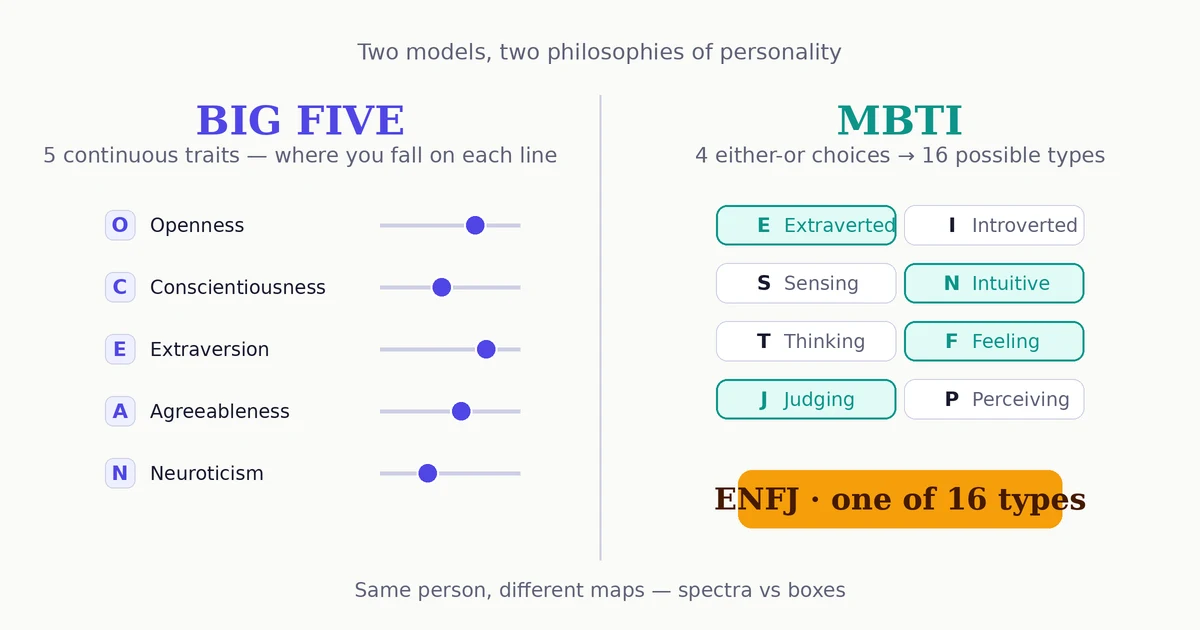
Split comparison diagram: the Big Five's five trait sliders versus MBTI's four either-or preference switches producing a type code like ENFJ

Big Five vs MBTI: How Are They Different?

The Big Five describes your personality as five continuous traits — openness, conscientiousness, extraversion, agreeableness, and neuroticism. MBTI sorts you …
Read More →

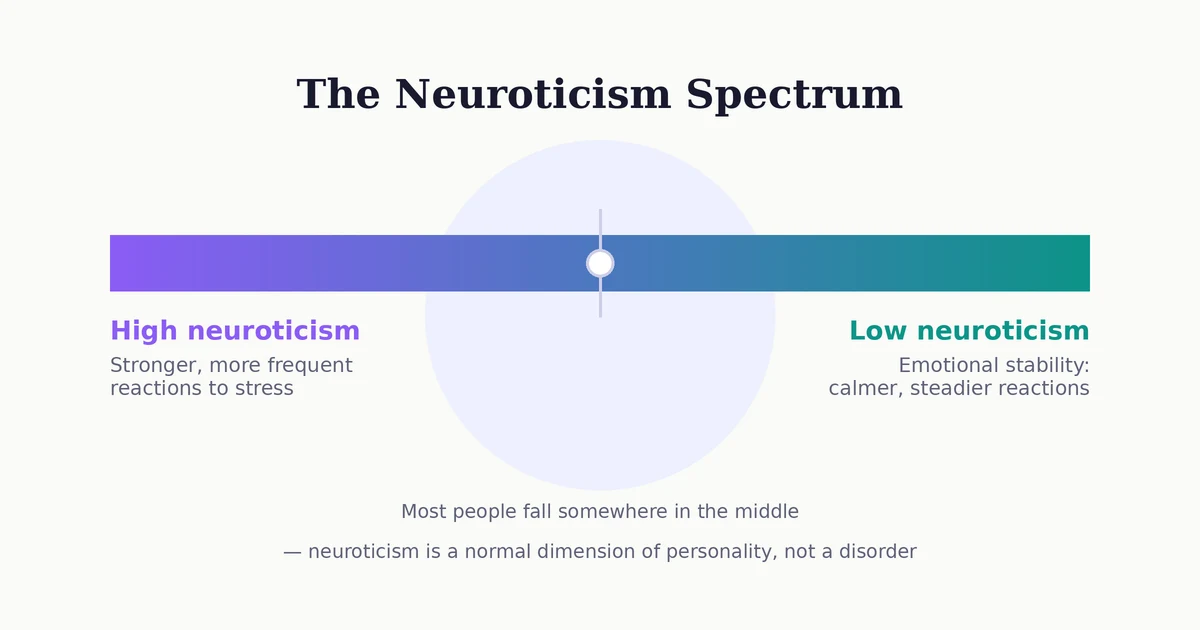
Diagram of the neuroticism spectrum, from high neuroticism with strong frequent reactions to stress, to low neuroticism, also called emotional stability, with calm steady reactions

Neuroticism: Meaning, Signs & Examples

Neuroticism is the personality trait that describes how strongly a person reacts to life’s challenges with negative emotions — worry, …
Read More →

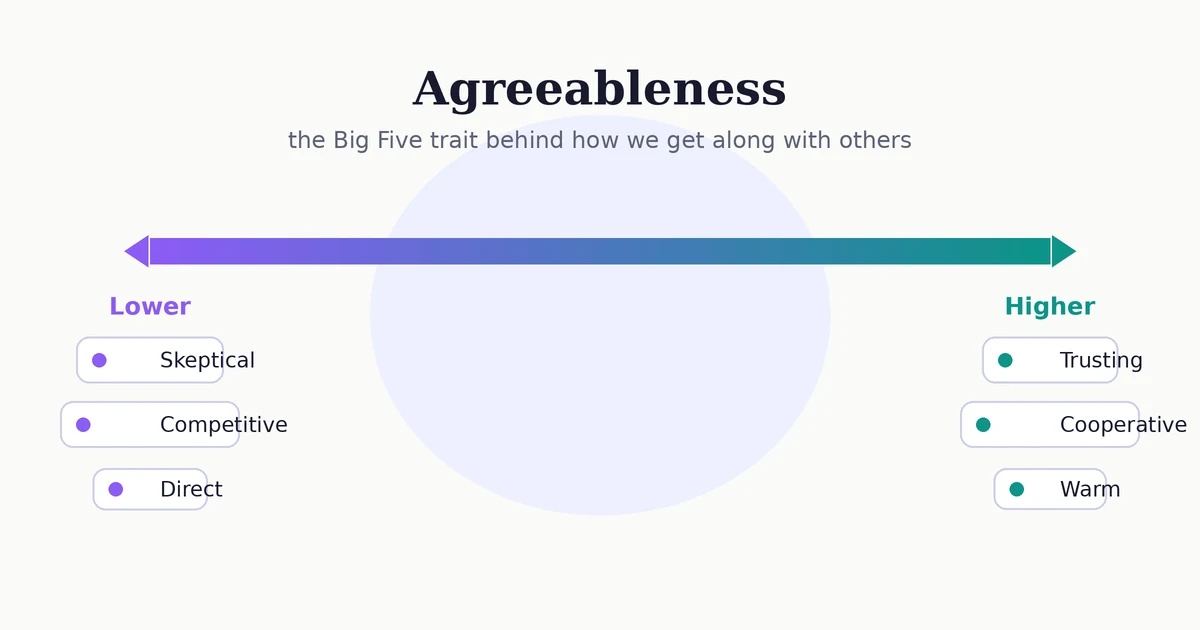
Diagram showing the agreeableness spectrum from lower to higher, with signs like skeptical and competitive on the lower end and trusting and cooperative on the higher end

Agreeableness: Meaning, Signs & Examples

Agreeableness is the personality trait behind how warmly and cooperatively we deal with other people. If you’ve ever wondered why …
Read More →

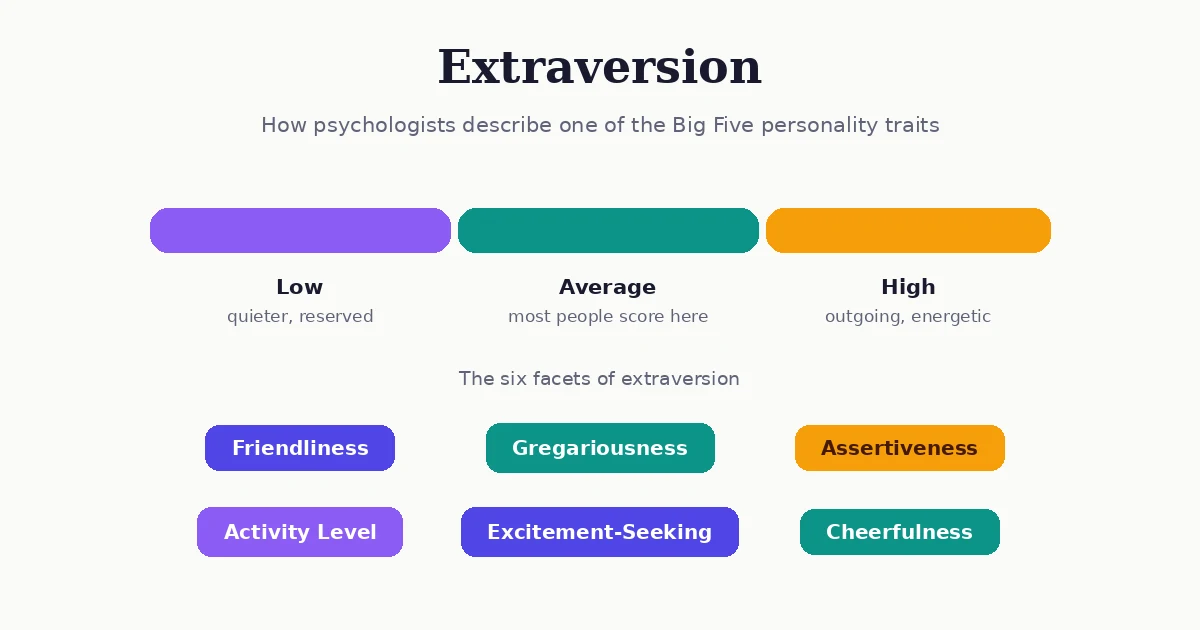
Spectrum diagram of extraversion from low to high, noting most people score near the middle, with its six facets: friendliness, gregariousness, assertiveness, activity level, excitement-seeking, and cheerfulness

Extraversion: The Big Five Trait Explained

Extraversion is one of the five broad personality traits psychologists use to describe how people differ. In simple terms, it …
Read More →

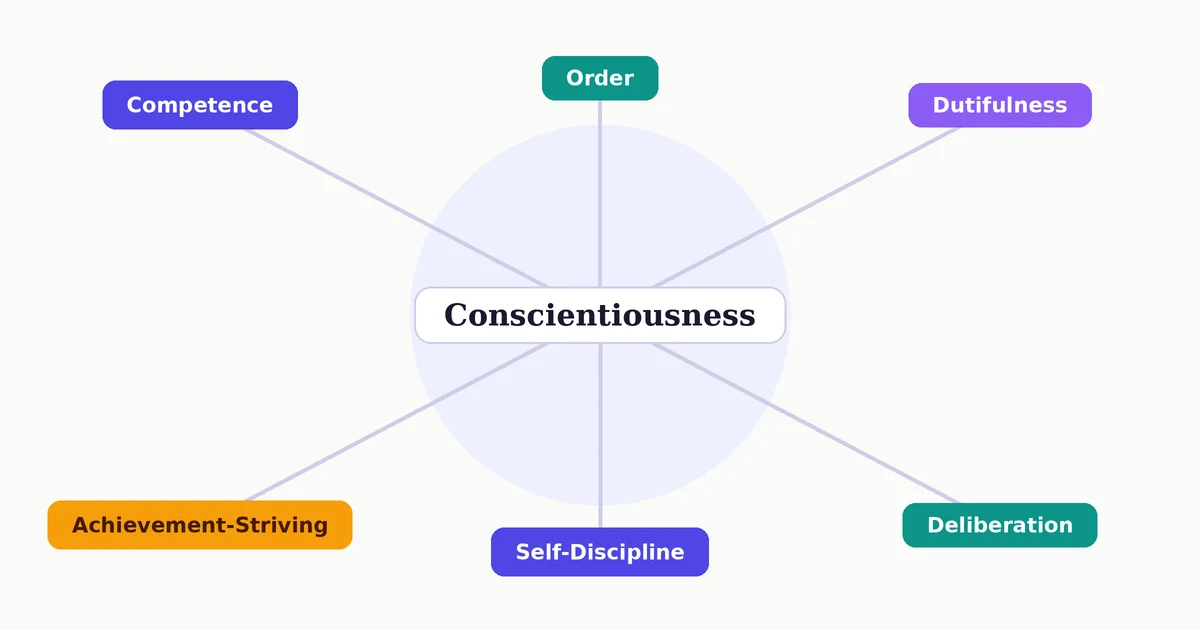
Diagram of the six facets of conscientiousness: competence, order, dutifulness, achievement-striving, self-discipline, and deliberation

Conscientiousness: Meaning, Signs & Examples

Conscientiousness is the personality trait of being responsible, careful, and diligent — the tendency to be organized, self-disciplined, and driven …
Read More →

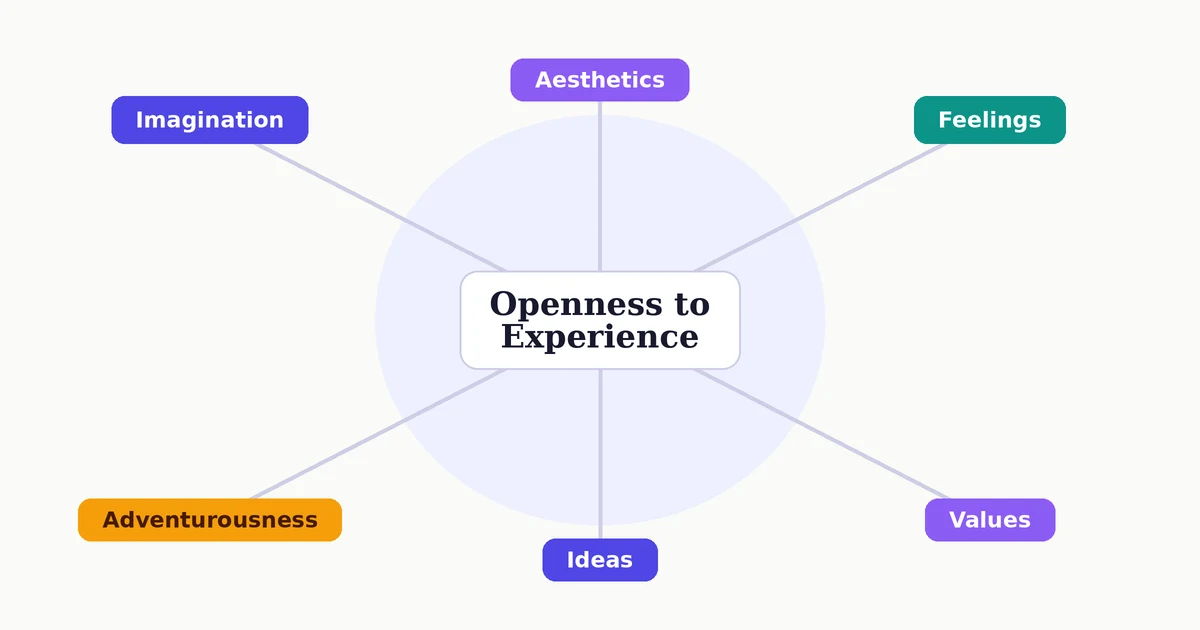
Diagram of openness to experience and its six facets: imagination, aesthetics, feelings, adventurousness, ideas, and values

Openness to Experience: Meaning, Signs & Examples

Openness to experience — usually shortened to just openness — is the personality trait that describes how receptive you are …
Read More →

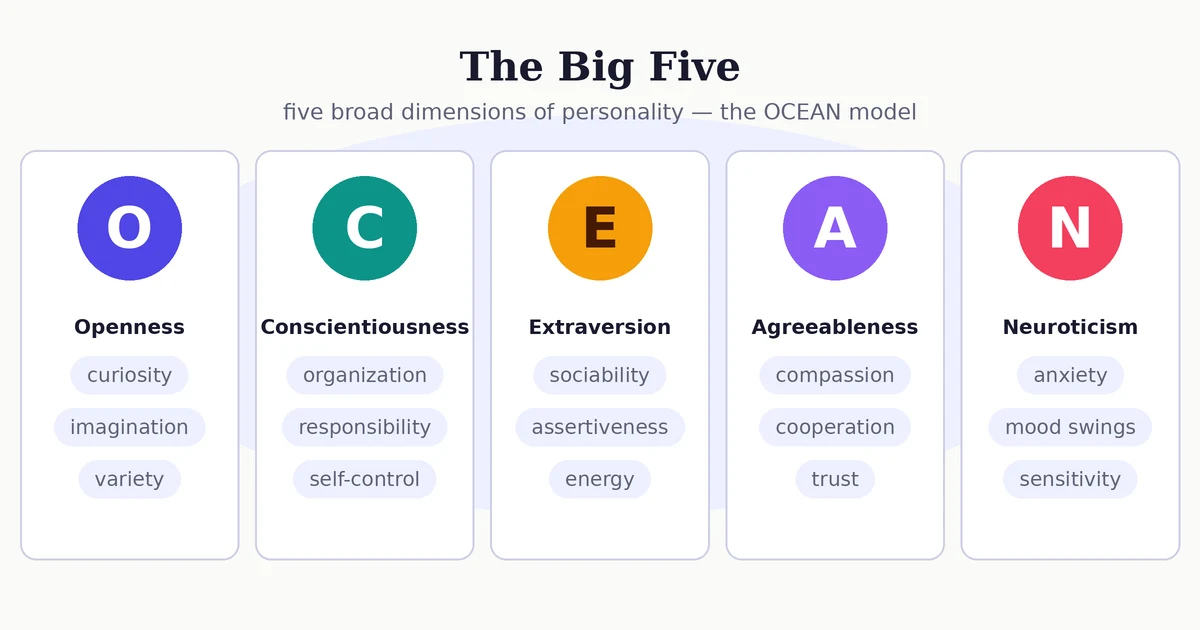
Diagram of the Big Five OCEAN model: five cards for Openness, Conscientiousness, Extraversion, Agreeableness, and Neuroticism, each listing key facet words

Big Five Personality Traits: The OCEAN Model Explained

The Big Five — also called the five-factor model — is a widely used framework in personality psychology for describing …

Read More →

Older posts
Newer posts
← Previous Page1 … Page9 Page10 Page11 Next →

Recent Posts

  • Abstract diagram of colourful building blocks and shapes in playful arrangement, illustrating children's play.Why Children Play: The Psychology of Play
  • Abstract diagram of small stepping stones rising in a sequence, illustrating developmental milestones in childhood.Developmental Milestones in Childhood: What to Know
  • Abstract diagram of a tree with deep roots and wide branches in warm autumn tones, illustrating aging and accumulated experience.The Psychology of Aging: What Research Finds
  • Abstract diagram of a young tree branching in many directions, illustrating identity and growth in adolescence.Adolescence: What Psychology Knows
  • Abstract diagram of four quadrants formed by two crossing axes, illustrating the four parenting styles.Parenting Styles: What Research Says
  • Abstract diagram of three ascending levels with six steps, illustrating Kohlberg's stages of moral development.Kohlberg’s Stages of Moral Development Explained
  • About
  • Contact
  • Privacy Policy
  • Terms of Service
  • Disclaimer
© 2026 psychologyconnections All Rights Reserved.